
China Converts Zhongda 79 into Armed Merchant Cruiser
On December 29, 2025, China officially announced the conversion of the container ship Zhongda 79 into an armed merchant cruiser, a significant development in maritime military capabilities. This transformation has been discussed by Sal Mercogliano, a maritime historian at Campbell University and a former merchant mariner, who elaborated on the implications and strategic applications of this conversion.
Key Details
The Zhongda 79, previously a standard container ship, has been outfitted with military capabilities, marking a notable shift in China"s naval strategy. This conversion allows the vessel to function not only as a commercial ship but also as a warship, enhancing its operational versatility. Mercogliano"s analysis highlights the potential uses of armed merchant cruisers, particularly in the context of modern naval warfare.
In his discussion, Mercogliano differentiates between armed merchant cruisers and traditional commerce raiders, emphasizing the strategic advantages that such vessels can provide. He outlines that the arming of Zhongda 79 is part of a broader trend where China"s merchant marine is increasingly viewed as a naval auxiliary force, capable of supporting military operations while also engaging in commercial activities.
Mercogliano raises the question of why China has chosen to arm the Zhongda 79, suggesting that this move could be a response to evolving maritime threats and the need for a cost-effective military solution. The conversion of merchant vessels into armed cruisers allows for a more flexible and less expensive approach to naval warfare compared to traditional warships.
Furthermore, the discussion touches on the strategic implications of this development, particularly regarding first strike capabilities. The ability to deploy armed merchant cruisers like Zhongda 79 could provide China with a tactical advantage in maritime confrontations, allowing for preemptive actions against potential adversaries.
Mercogliano also compares this strategy to the United States Navy"s battleship and frigate programs, highlighting the differences in operational philosophy and resource allocation. The emphasis on cost-effectiveness and the expendability of armed merchant cruisers could reshape naval engagements in the future, particularly in regions where traditional naval assets may be limited.
Background
The conversion of merchant vessels into armed cruisers is not a new concept; historically, nations have utilized commercial ships for military purposes during times of conflict. However, the modern iteration of this strategy, as exemplified by Zhongda 79, reflects the changing dynamics of naval warfare and the increasing importance of hybrid naval capabilities. As global maritime tensions rise, the integration of military functions into commercial fleets may become a more common practice among nations seeking to enhance their naval presence without incurring the high costs associated with conventional warships.
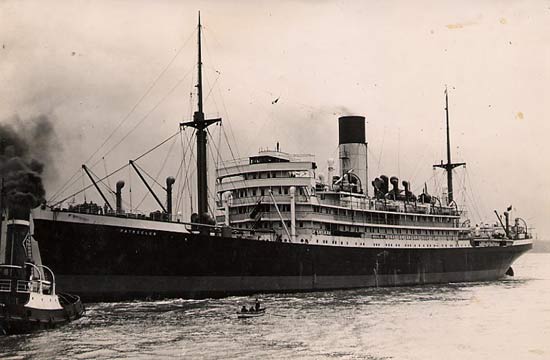
Image for China Converts Zhongda 79 into Armed Merchant Cruiser
What"s Next
The implications of arming merchant vessels like Zhongda 79 extend beyond China"s immediate maritime strategy. As other nations observe China"s advancements, there may be a ripple effect leading to similar conversions of commercial vessels in various navies around the world. This trend could alter the landscape of naval warfare, prompting a reevaluation of naval doctrines and strategies globally.
As previously reported, developments in maritime military capabilities are crucial to understanding the geopolitical landscape. The conversion of Zhongda 79 into an armed merchant cruiser is a clear indication of China"s commitment to enhancing its naval capabilities and asserting its influence in international waters.
For more on recent developments in international politics and military strategies, see our coverage on recent developments and related coverage.
![[Video] Joint Task Force Southern Spear conducts lethal strike on narco-traffickers](/_next/image?url=%2Fapi%2Fimage%2Fthumbnails%2Fthumbnail-1767050443027-zjg5z-thumbnail.jpg&w=3840&q=75)
![[Video] Trump: Netanyahu will do the right thing on the West Bank](/_next/image?url=%2Fapi%2Fimage%2Fthumbnails%2Fthumbnail-1767045043896-jlazjj-thumbnail.jpg&w=3840&q=75)

![[Video] Trump warns Iran of consequences if it resumes missile and nuclear programs](/_next/image?url=%2Fapi%2Fimage%2Fthumbnails%2Fthumbnail-1767040245331-zm4oj-thumbnail.jpg&w=3840&q=75)