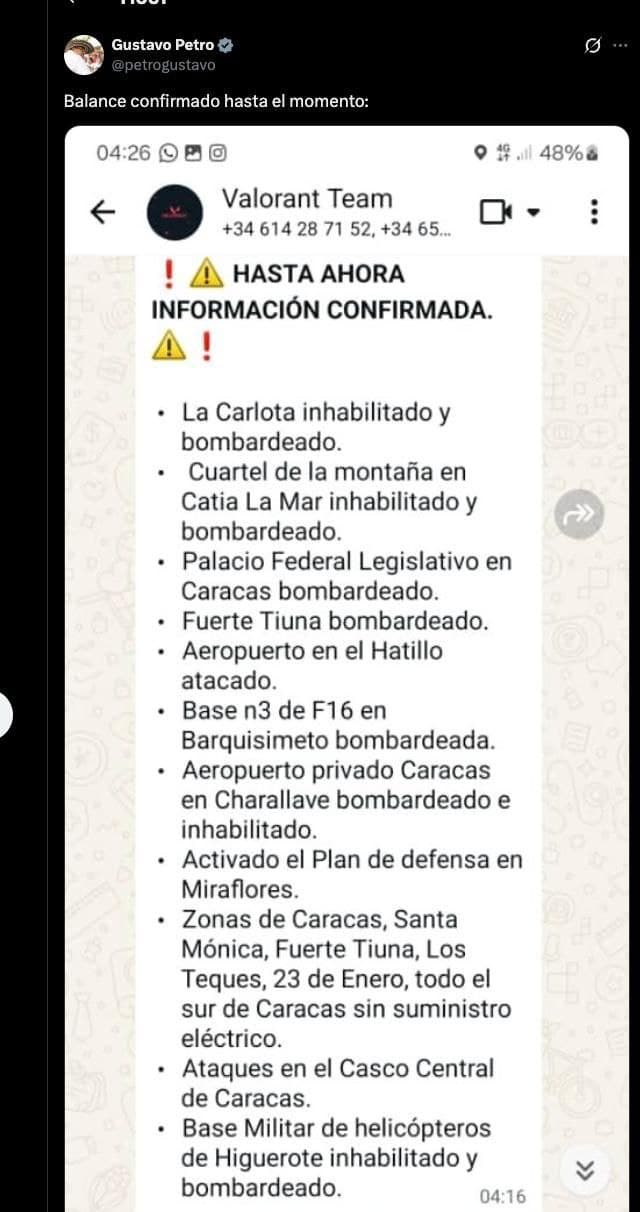
Colombian President Gustavo Petro Lists US-Attacked Targets in Venezuela
On January 3, 2026, Colombian President Gustavo Petro publicly released a list of targets in Venezuela that have reportedly been attacked by U.S. military forces. The list includes critical infrastructure and military installations across the country, highlighting the escalating tensions between the United States and the Venezuelan government.
Key Details
The following locations were identified by President Petro as targets of U.S. attacks:
- La Carlota Airport: A significant airport located in Caracas, which has been a focal point for military and civilian air traffic.
- Military Garrison in Catia la Mar: This facility serves as a base for Venezuelan military operations, located near the coast.
- Federal Legislative Palace in Caracas: The seat of the Venezuelan National Assembly, this building is crucial for the country"s legislative processes.
- Fuerte Tiuna Military Base: One of the largest military bases in Venezuela, located in Caracas, it is pivotal for the country"s defense strategy.
- Airport in El Atillo: Another airport that supports both civilian and military operations in the region.
- F-16 Air Base No. 3 in Barquisimeto: This base is known for housing advanced military aircraft, including F-16 fighter jets.
- Private Airport in Charallave: Located in the outskirts of Caracas, this airport is used for private and corporate flights.
- Military Helicopter Base in Igualta: A base dedicated to helicopter operations, essential for military logistics and transportation.
In addition to these specific targets, attacks have also been reported in the historic center of Caracas, indicating a broader scope of military engagement in urban areas.
In response to these developments, a defense plan has been implemented around the Miraflores presidential palace, the official workplace of the Venezuelan President. This measure aims to bolster security in light of the ongoing military actions.
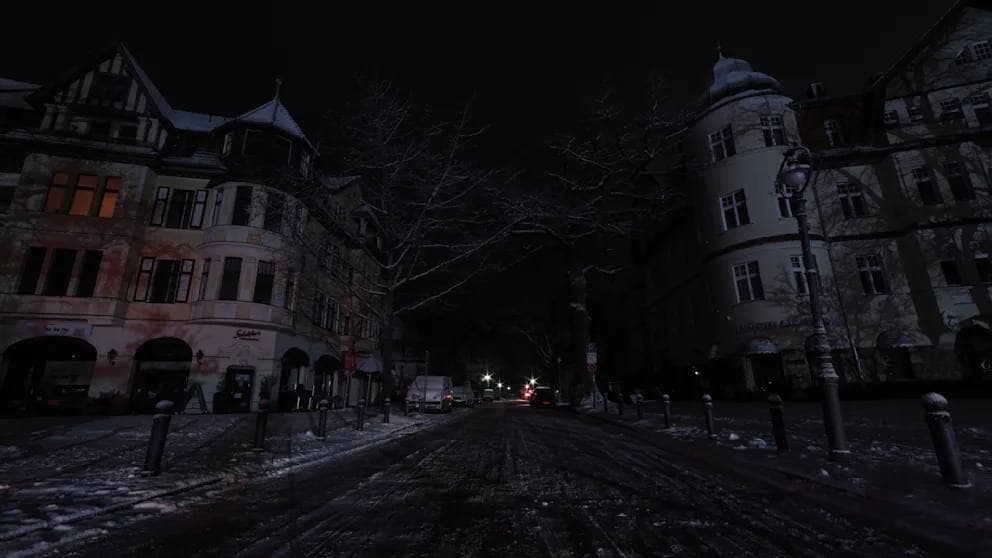
Furthermore, several districts south of Caracas, including Santa Monica, Fuerte Tiuna, Los Teques, and 23 de Enero, are currently experiencing power outages. These outages may be a direct consequence of the military actions and the resulting infrastructure damage.
Background
The recent military operations in Venezuela have heightened tensions between the U.S. and the Venezuelan government, led by President Nicolás Maduro. The U.S. has been critical of the Maduro administration, citing human rights abuses and a deteriorating economic situation. The attacks come amid ongoing geopolitical struggles in the region, with various countries taking sides in the Venezuelan crisis.
As previously reported, Venezuelan President Maduro met with an envoy from Chinese President Xi Jinping shortly before the U.S. military actions commenced, indicating potential international diplomatic maneuvers in response to the situation. For more on this meeting, see our related coverage.
What"s Next
The implications of these military actions are significant, as they may lead to further escalation in U.S.-Venezuela relations. The Venezuelan government is likely to respond with increased military readiness and potential diplomatic efforts to garner support from allies. The situation remains fluid, and developments are expected as both sides navigate this complex conflict.
For further updates on the military operations and their consequences, refer to our article on how U.S. Armed Forces report no casualties in military operation in Venezuela.