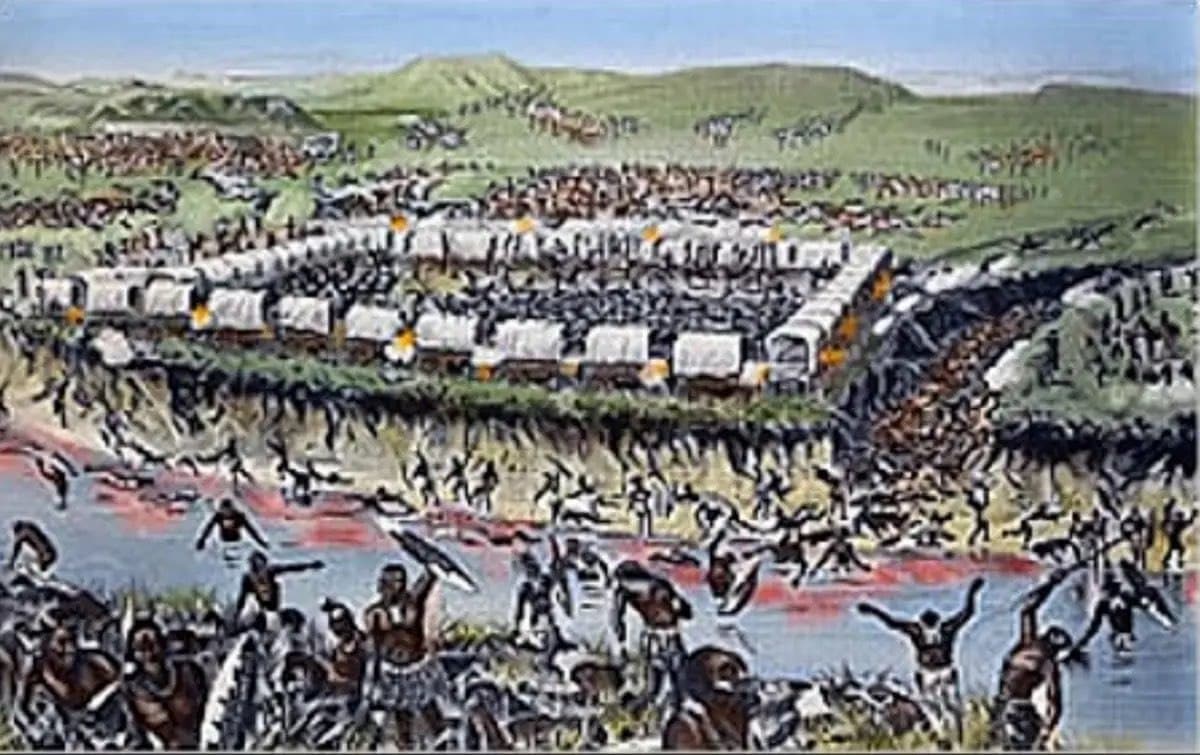
December 16 commemorates Gelofte Dag and the Voortrekkers" victory over Zulu forces
On December 16, 2025, South Africa observes Gelofte Dag, also known as the Day of the Vow, a significant day that commemorates the historical events surrounding the Afrikaner Voortrekkers during the Great Trek. This day serves as a reminder of the faith and resilience of the Afrikaner people as they navigated the challenges posed by British colonial rule and conflicts with indigenous groups, particularly the Zulu Empire.
Key Details
The Great Trek, which began in the 1830s, saw Afrikaner settlers, known as Voortrekkers, migrate away from British-controlled territories in the Cape Colony in search of autonomy and land. This migration was marked by a series of confrontations with various indigenous groups, most notably the Zulu. The Voortrekkers faced fierce resistance, leading to significant clashes, including the infamous Weenen Massacre.
One of the pivotal moments during this period was the betrayal of Piet Retief, a prominent Voortrekker leader. In 1838, Retief and his delegation of 70 men were killed by the Zulu king Dingane, who had initially promised to negotiate land agreements. This massacre was a turning point that ignited a fierce response from the Voortrekkers, who sought retribution for the brutal killing of their compatriots.
In the aftermath of Retief"s death, the Voortrekkers, led by Andries Pretorius, rallied to confront the Zulu forces. On February 17, 1838, a small contingent of approximately 464 Voortrekkers formed a fortified laager at the Battle of Blood River, strategically positioned against an estimated 10,000 to 15,000 Zulu warriors. The Voortrekkers, armed with rifles and cannons, successfully defended their position and launched a counter-offensive against the Zulu charges.
The battle resulted in a decisive victory for the Voortrekkers, with only three of their men sustaining injuries, while it is estimated that over 3,000 Zulu warriors were killed during the conflict. This overwhelming victory solidified the Voortrekkers" resolve and is commemorated annually on December 16 as Gelofte Dag, a day that symbolizes their covenant with God and their commitment to their cause.
Background
Gelofte Dag has evolved into a significant cultural and historical observance for the Afrikaner community, representing their struggle for identity and autonomy in the face of colonial pressures. The events of the Great Trek and the subsequent battles have become foundational narratives within Afrikaner nationalism, shaping their collective memory and identity. The legacy of the Voortrekkers is often invoked in discussions surrounding South African history, particularly in relation to issues of land, sovereignty, and cultural heritage.
What"s Next
As South Africa continues to grapple with its complex history, the observance of Gelofte Dag remains a poignant reminder of the past. It serves not only as a day of remembrance for the Voortrekkers" sacrifices but also as a point of reflection on the ongoing dialogues surrounding reconciliation and nation-building in a post-apartheid society. The historical narratives surrounding the Voortrekkers and their battles continue to influence contemporary discussions on identity, heritage, and the socio-political landscape of South Africa.
For more on related topics, see our coverage of recent developments in politics.
![[Video] Sir Robert Menzies warns against issues from White Australia Policy](/_next/image?url=%2Fapi%2Fimage%2Fthumbnails%2Fthumbnail-1765723880043-x8t0ro-thumbnail.jpg&w=3840&q=75)
![[Video] Thomas Rousseau introduces 'White American History: I - Before Jamestown'](/_next/image?url=%2Fapi%2Fimage%2Fthumbnails%2Fthumbnail-1765291393654-udewz7-thumbnail.jpg&w=3840&q=75)


![[Video] President Trump restricts entry of foreign nationals to protect U.S. security](/_next/image?url=%2Fapi%2Fimage%2Fthumbnails%2Fthumbnail-1765925476990-qyuuqy-thumbnail.jpg&w=3840&q=75)