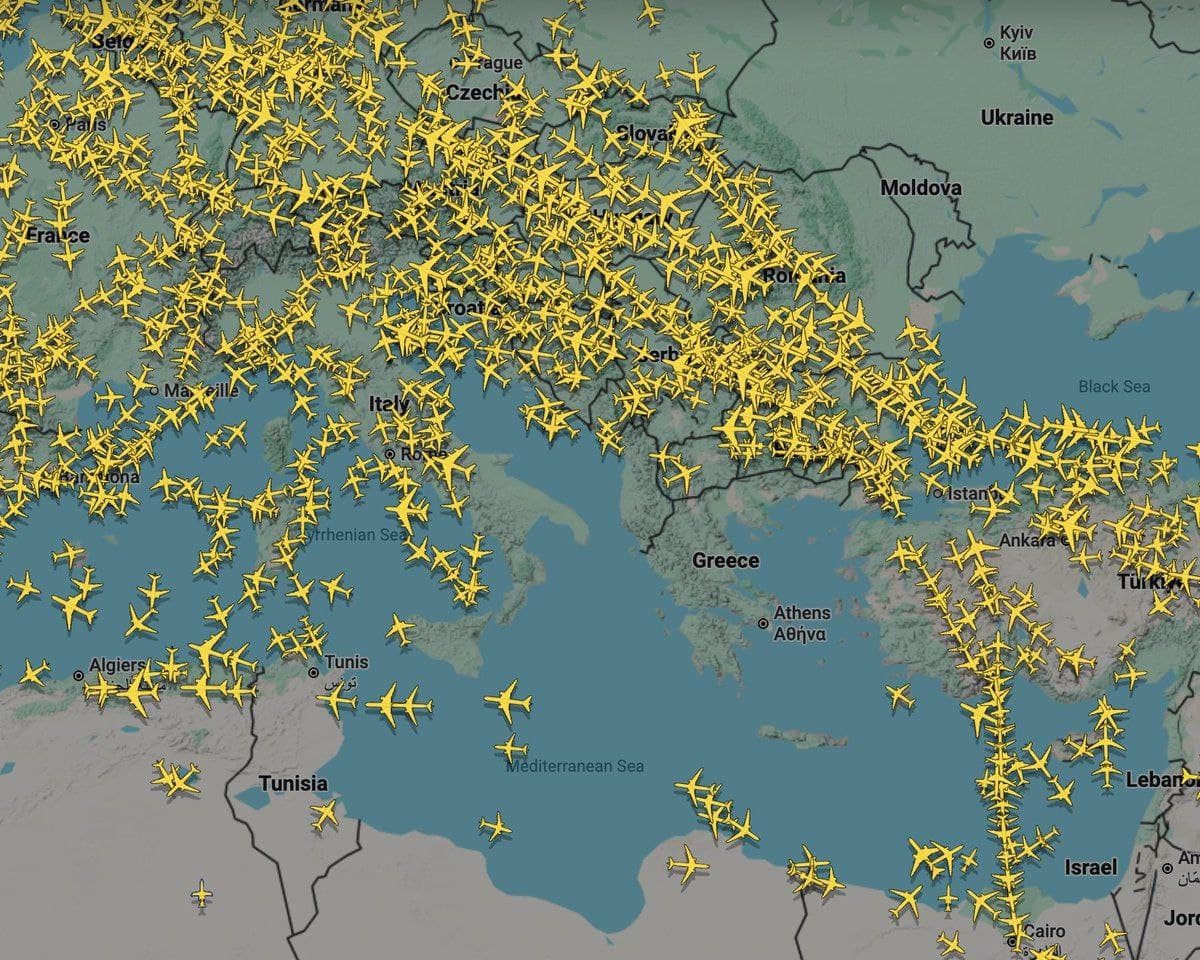
Greece Closes Airspace Due to Communication System Failure
On Sunday, January 4, 2026, the Greek government announced a complete closure of its airspace following a significant technical failure at the Athens Flight Information Region (FIR). This incident has severely disrupted air traffic control communications and radio frequencies, which are crucial for managing air travel within Greek airspace. As a result, all departures and arrivals at Greek airports have been suspended, leading to widespread travel disruptions.
Key Details
The Athens FIR is responsible for overseeing air traffic control communications across Greece, a vital hub for both domestic and international flights. The technical failure has rendered central radio communication systems inoperable, which are essential for air traffic controllers to communicate with pilots and manage flight operations safely.
While flights that were already in the air at the time of the failure continue to operate, authorities are actively working to ensure the safe landing of these aircraft. However, the exact cause of the communication system failure remains unknown, and officials have not provided a timeline for when normal operations will resume.
This incident is particularly concerning given the critical role that effective communication plays in air traffic management. The suspension of all flight operations has raised alarms among travelers and airline companies alike, as they navigate the uncertainties surrounding their travel plans.
Background
Greece"s airspace is a significant corridor for European air travel, connecting various international destinations. The Athens FIR is a key component of the European air traffic management system, which coordinates flights across multiple countries to ensure safety and efficiency. Previous incidents of technical failures in air traffic control systems have led to temporary closures and disruptions, highlighting the importance of maintaining robust communication infrastructure.
In recent years, there have been various reports of technical issues affecting air traffic systems globally, underscoring the need for ongoing investment in technology and training for air traffic controllers. The current situation in Greece mirrors concerns raised in other regions, where similar failures have led to significant operational challenges. For instance, recent developments in other sectors have shown how critical infrastructure failures can have widespread implications.
What"s Next
As authorities work to diagnose and rectify the communication system failure, travelers are advised to stay informed about the status of their flights. Airlines are likely to provide updates as more information becomes available regarding the resumption of normal operations. The Greek government is expected to release further statements outlining the steps being taken to restore air traffic control communications and ensure the safety of air travel in the region.
This incident serves as a reminder of the vulnerabilities inherent in air traffic management systems and the importance of maintaining reliable communication networks. Stakeholders in the aviation industry will be closely monitoring the situation as it develops, with implications for air travel safety and efficiency in Greece and beyond.
![[Video] Berlin police inform residents of partial power outage](/_next/image?url=%2Fapi%2Fimage%2Fthumbnails%2Fthumbnail-1767457921034-sysguu-thumbnail.jpg&w=3840&q=75)


![[Video] Large fire breaks out at historic Vondelpark church in Amsterdam](/_next/image?url=%2Fapi%2Fimage%2Fthumbnails%2Fthumbnail-1767230477614-co6sf-thumbnail.jpg&w=3840&q=75)
![[Video] Trump cites national security in discussing Greenland's importance](/_next/image?url=%2Fapi%2Fimage%2Fthumbnails%2Fthumbnail-1767581442077-atq0gv-thumbnail.jpg&w=3840&q=75)
![[Video] Trump: Rare-earth minerals are everywhere, processing is what's rare](/_next/image?url=%2Fapi%2Fimage%2Fthumbnails%2Fthumbnail-1767580256558-kaklcg-thumbnail.jpg&w=3840&q=75)