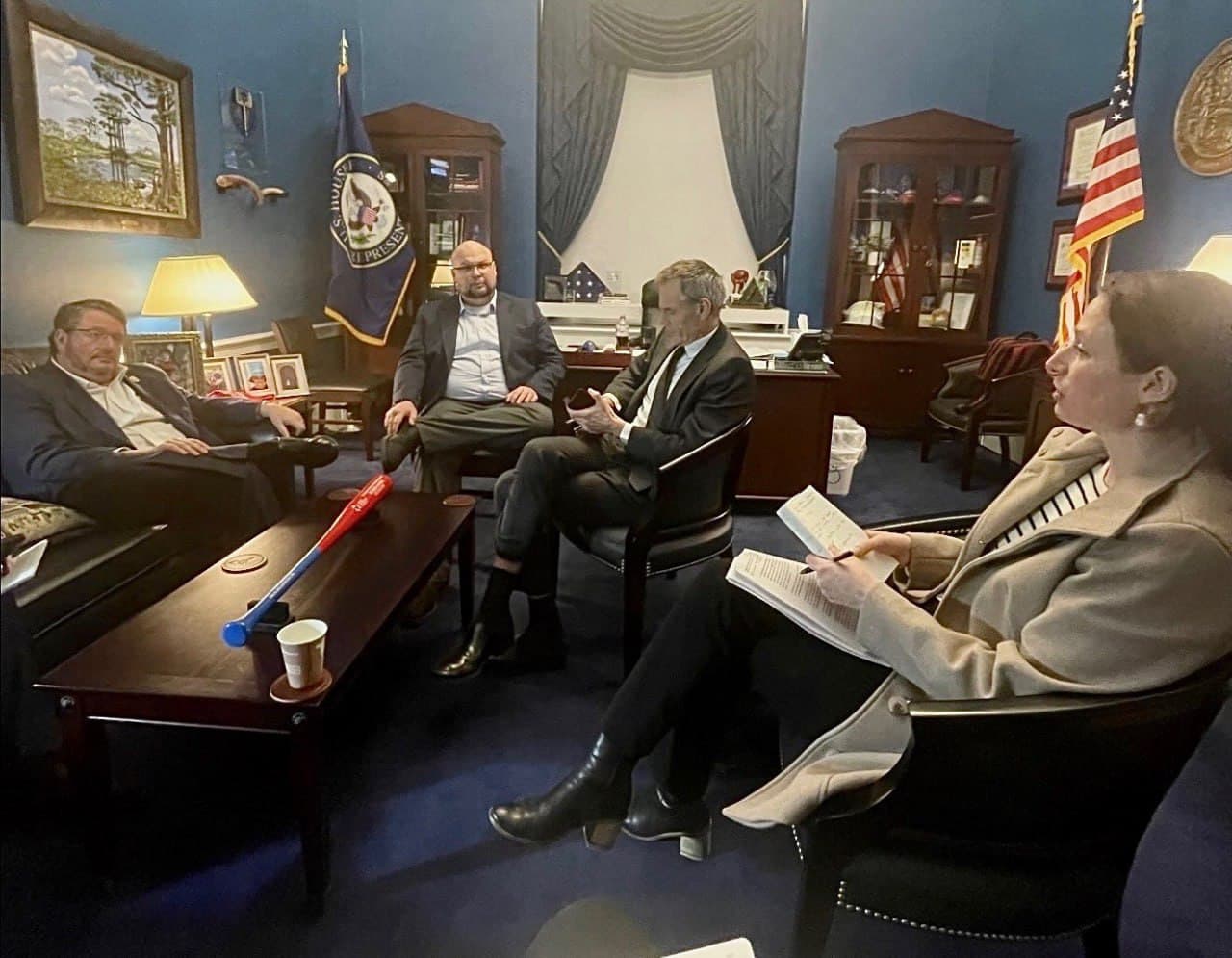
Greenland Officials Meet with Rep. Randy Fine on Annexation Concerns
On January 12, 2026, Deputy Head of the Greenland Representation, Rebecca Lynge, and Denmark’s Ambassador to the United States, Jesper Møller Sørensen, held a significant meeting with Republican Representative Randy Fine. The discussion centered around Fine"s recent introduction of the "Greenland Annexation and Statehood Act," which has raised concerns regarding Greenland"s sovereignty and territorial integrity.
Key Details
Rebecca Lynge, who serves as the Deputy Head of the Greenland Representation, and Jesper Møller Sørensen, Denmark’s ambassador to the U.S., met with Representative Randy Fine to address the implications of his proposed legislation. The "Greenland Annexation and Statehood Act" suggests a potential shift in the governance of Greenland, a territory that is part of the Kingdom of Denmark.
During the meeting, Lynge and Sørensen reiterated the official stance of the Government of Greenland, emphasizing that Greenland is an integral part of the Kingdom of Denmark. They highlighted that Greenland is a member of the North Atlantic Treaty Organization (NATO), which obligates member states to guarantee each other"s defense. This assertion underscores the geopolitical significance of Greenland, particularly in light of its strategic location and resources.
Furthermore, the Greenlandic officials made it clear that the governing coalition in Greenland would not tolerate any attempts by the United States to exert control over the territory. They firmly stated, "Greenland is not for sale," reinforcing their commitment to maintaining Greenland"s sovereignty. However, they expressed openness to U.S. investment and economic cooperation, indicating a willingness to engage in mutually beneficial partnerships while safeguarding their territorial rights.
Background
The introduction of the "Greenland Annexation and Statehood Act" by Rep. Randy Fine has sparked a renewed debate over Greenland"s status and its relationship with both Denmark and the United States. Greenland, the world"s largest island, has been a part of the Kingdom of Denmark since 1721 and has a unique self-governing status. The territory has gained international attention in recent years, particularly due to its vast natural resources and strategic military significance in the Arctic region.
The discussions surrounding Greenland"s future have been further complicated by geopolitical tensions, particularly between the U.S. and other nations vying for influence in the Arctic. The region is becoming increasingly important due to climate change, which is opening new shipping routes and access to untapped resources.
What"s Next
The meeting between Greenlandic officials and Rep. Fine highlights the ongoing concerns regarding territorial integrity and sovereignty as discussions about Greenland"s future continue. As the U.S. government considers its foreign policy approach towards Greenland, the statements made by Lynge and Sørensen serve as a reminder of the importance of respecting the wishes of the Greenlandic people and their government.
As previously reported, the geopolitical landscape in the Arctic is shifting, and the implications of any legislative changes regarding Greenland could have far-reaching consequences not only for the territory itself but also for international relations in the region. The Greenlandic government remains vigilant in protecting its rights while exploring opportunities for economic collaboration with the United States and other partners.
For further insights into related coverage, see our article on recent developments in international lobbying efforts.
![[Video] Heavy clashes between Syrian Arab Army and SDF militia in Al-Mardud](/_next/image?url=%2Fapi%2Fimage%2Fthumbnails%2Fthumbnail-1768257668705-bzba9s-thumbnail.jpg&w=3840&q=75)
![[Video] SDF/YPG militias deploy reinforcements to Deir Hafer front line](/_next/image?url=%2Fapi%2Fimage%2Fthumbnails%2Fthumbnail-1768257654986-e7coft-thumbnail.jpg&w=3840&q=75)


![[Video] U.S. Secretary of War Hegseth directs CDAO to enforce DOW data decrees](/_next/image?url=%2Fapi%2Fimage%2Fthumbnails%2Fthumbnail-1768267268858-qe5gg-thumbnail.jpg&w=3840&q=75)
![[Video] U.S. Secretary of War Hegseth announces AI models for all networks](/_next/image?url=%2Fapi%2Fimage%2Fthumbnails%2Fthumbnail-1768266692112-e1gew-thumbnail.jpg&w=3840&q=75)