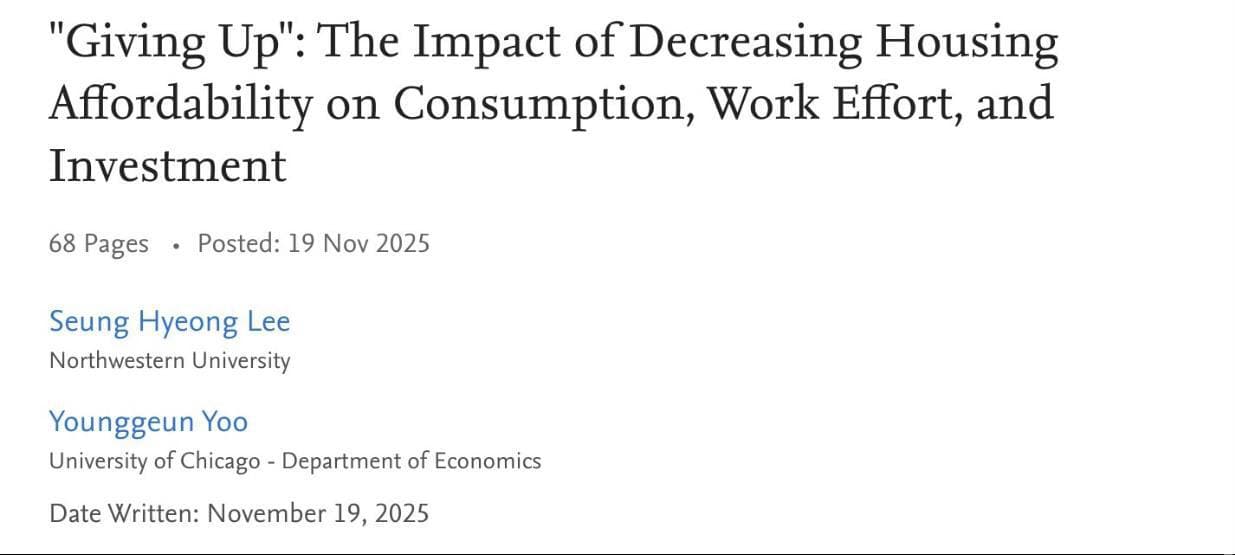
Housing Affordability Crisis Impacts Gen Z Spending and Risk-Taking Behavior
Recent research highlights a significant correlation between housing affordability and the economic behaviors of Generation Z, suggesting that the ongoing housing crisis is reshaping their cultural and financial landscape. The findings indicate that as young people increasingly doubt their chances of homeownership, their spending habits, work ethic, and risk-taking behaviors are evolving dramatically.
Key Details
According to a detailed analysis, the housing crisis has led to a marked shift in the attitudes and behaviors of individuals born in the 1990s. This demographic is projected to retire with homeownership rates approximately 10 percentage points lower than those of their parents. This decline in homeownership is contributing to a broader sense of disillusionment regarding the possibility of owning property, with many young people mentally resigning themselves to the idea that homeownership is unattainable.
As a direct consequence of this mindset, the study reveals that young individuals are saving less money, consuming more goods, and working fewer hours. Specifically, their rate of consumption has increased by 5-7%, while their work effort has decreased by 1.5-2.5%. Furthermore, the propensity for risk-taking among this age group has surged, with an increase of 6-10% in risky financial behaviors.
Financial projections indicate that those who do manage to purchase homes are likely to accumulate around 30% less wealth by the time they reach retirement compared to previous generations. This trend underscores the long-term economic implications of the housing crisis, as the dream of homeownership fades for many young adults.
The shift in expectations surrounding homeownership has also influenced investment behaviors. With traditional paths to wealth accumulation, such as home equity, becoming less viable, young people are increasingly drawn to high-risk financial opportunities. This phenomenon has been observed in the rise of various speculative investments, including meme stocks, alternative cryptocurrencies (altcoins), leveraged Bitcoin treasury plays, and Special Purpose Acquisition Companies (SPACs). These investment vehicles, often characterized by their lottery-like potential for high returns, have gained popularity as the conventional, safer routes to financial stability diminish.
Background
The findings from this research provide a critical lens through which to view the changing economic landscape for younger generations. As homeownership becomes less attainable, the resulting shifts in behavior not only affect individual financial health but also ripple through the broader economy. The implications of these changes are profound, as they challenge traditional economic models that have relied on home equity as a cornerstone of wealth accumulation.
What"s Next
As the housing affordability crisis continues to evolve, it is essential to monitor its ongoing impact on Generation Z and subsequent generations. The trend of increased consumption and risk-taking could lead to significant changes in market dynamics, potentially fostering a more volatile economic environment. Policymakers and financial institutions may need to adapt their strategies to address the unique challenges posed by this demographic shift, ensuring that economic opportunities remain accessible to younger generations.
For further insights into related developments, see our previous reports on economic trends and their societal implications.


