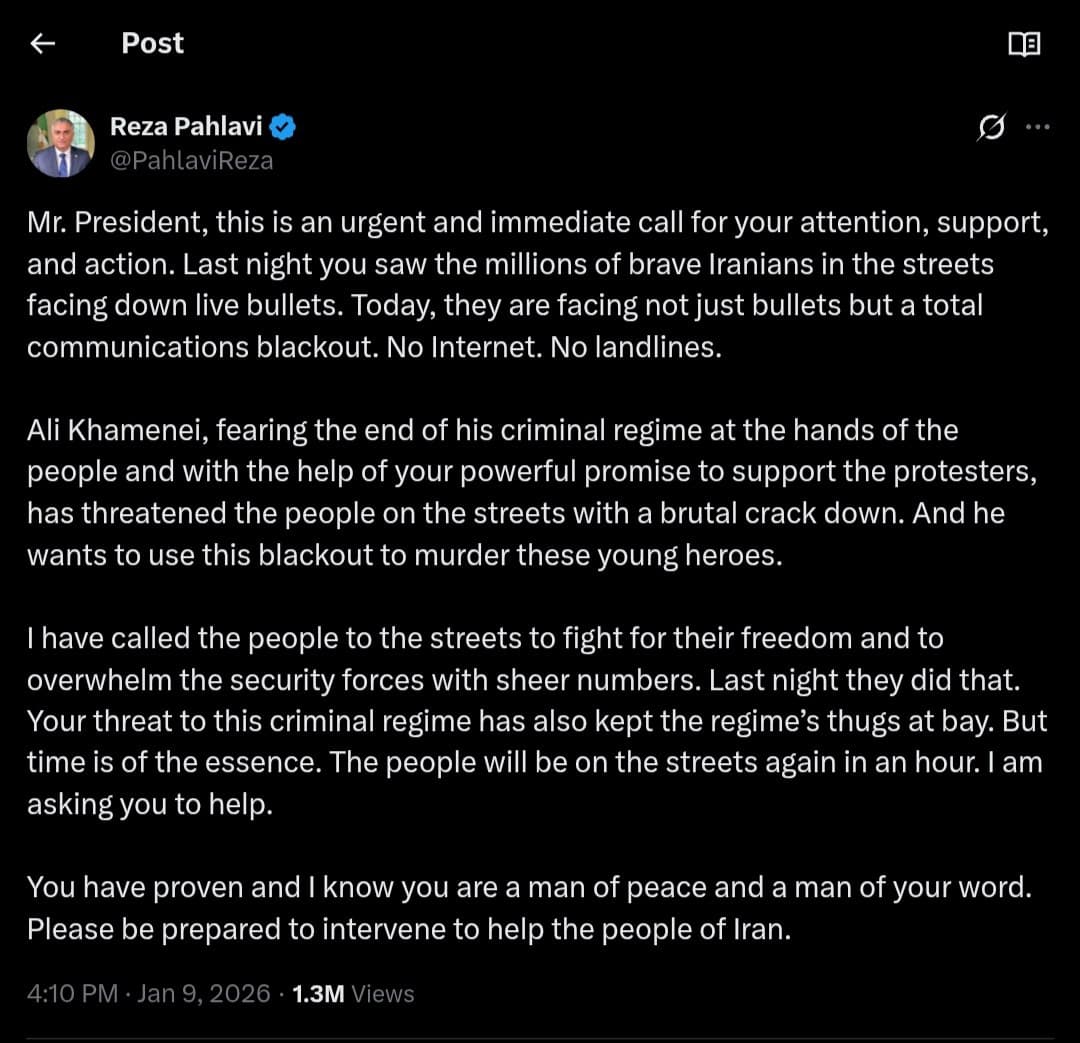
Iranian Crown Prince Reza Pahlavi Calls for U.S. Support Amid Nationwide Protests
In a dramatic appeal for international assistance, Iranian Crown Prince and opposition leader Reza Pahlavi has issued an "urgent immediate call" for the United States, particularly former President Donald Trump, to provide support and action in response to escalating protests across Iran. This call comes as Iranian citizens face violent repression from regime security forces amid widespread unrest.
Key Details
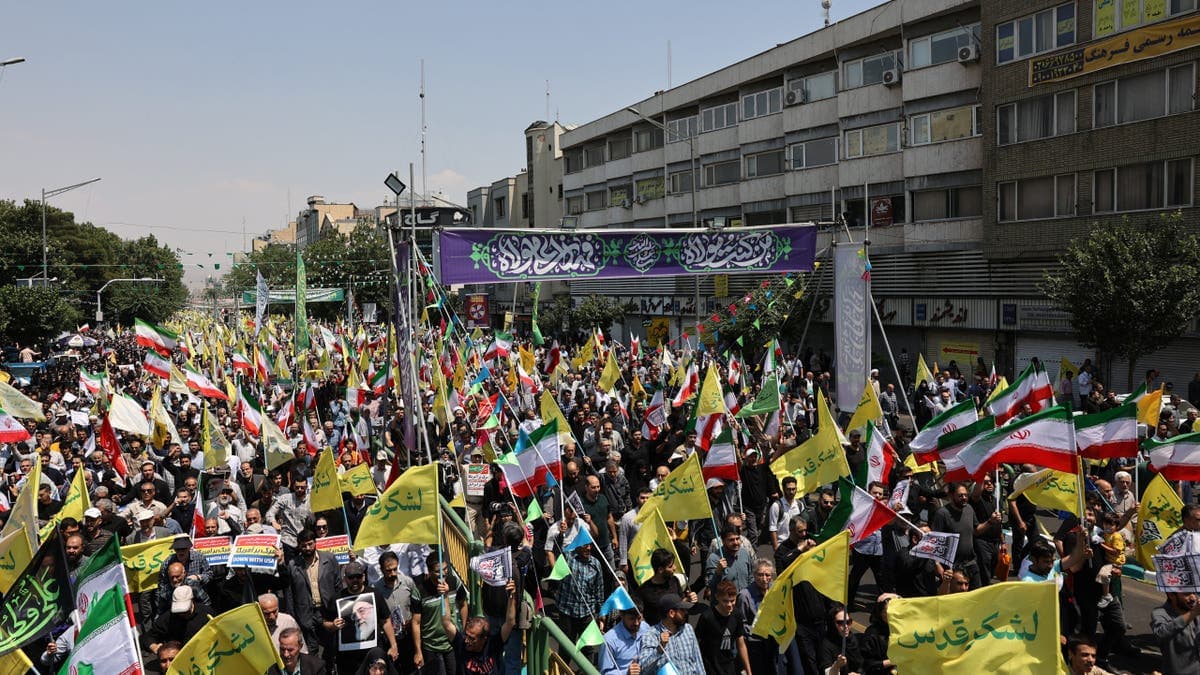
Pahlavi"s statement highlights the dire situation in Iran, where millions of protesters have taken to the streets to demand freedom and reform. He noted that demonstrators are confronting not only live ammunition but also a total communications blackout, which has left them without access to the internet or landline services. This blackout is perceived as a tactic by the Iranian regime to suppress dissent and facilitate violent crackdowns on protesters.
In his message, Pahlavi specifically referenced Iranian Supreme Leader Ali Khamenei, who he claims is fearful of losing power and has threatened severe reprisals against those protesting. Pahlavi stated, "Ali Khamenei, fearing the end of his criminal regime at the hands of the people... has threatened the people on the streets with a brutal crackdown." He emphasized the urgency of the situation, urging the U.S. to intervene and support the demonstrators, who he described as "young heroes" fighting for their freedom.
Last night, Pahlavi called upon the Iranian people to take to the streets in large numbers to overwhelm the security forces. He reported that this strategy was effective, as the sheer volume of protesters kept the regime"s forces at bay, but he warned that time is of the essence as the protests are expected to continue imminently.
Pahlavi expressed confidence in Trump"s commitment to peace and support for the Iranian people, stating, "You have proven and I know you are a man of peace and a man of your word." He urged Trump to be prepared to intervene on behalf of the Iranian populace, emphasizing the critical nature of the current moment.
Background
The protests in Iran have been fueled by a combination of economic hardship, political repression, and demands for greater personal freedoms. The Iranian government has faced increasing criticism both domestically and internationally for its handling of dissent and its human rights record. The current unrest is part of a broader pattern of civil disobedience and protest that has characterized Iranian society in recent years.
In previous reports, similar situations have unfolded in various regions of Iran, including heavy clashes between Kurdish separatists and Iranian forces in Kermanshah, which further illustrate the volatile political landscape within the country. The Iranian regime"s response to protests has often involved violent crackdowns, leading to significant casualties among demonstrators.
What"s Next
The international community is watching closely as the situation in Iran develops. Pahlavi"s appeal for U.S. support could potentially influence the response of the American government and its allies. The outcome of these protests may have significant implications for the future of Iran"s political landscape and the regime"s stability. As protests are expected to continue, the potential for increased violence remains high, particularly if the regime perceives an existential threat to its authority.
For more on related coverage, see our article on recent developments in Kermanshah, where tensions between Kurdish groups and Iranian forces have escalated.
![[Video] Syria does not expect to join Abraham Accords due to Golan Heights occupation](/_next/image?url=%2Fapi%2Fimage%2Fthumbnails%2Fthumbnail-1768008052683-vwabb9-thumbnail.jpg&w=3840&q=75)
![[Video] Anti-ICE Protester spits on security guard outside Canopy by Hilton Hotel](/_next/image?url=%2Fapi%2Fimage%2Fthumbnails%2Fthumbnail-1768018861555-nlai59-thumbnail.jpg&w=3840&q=75)
![[Video] Anti-ICE Protesters briefly mob police car in downtown Minneapolis](/_next/image?url=%2Fapi%2Fimage%2Fthumbnails%2Fthumbnail-1768018299471-icyct-thumbnail.jpg&w=3840&q=75)
![[Video] Minneapolis Police Chief O’Hara attacked by anti-ICE rioters](/_next/image?url=%2Fapi%2Fimage%2Fthumbnails%2Fthumbnail-1768017695156-omhdfv-thumbnail.jpg&w=3840&q=75)