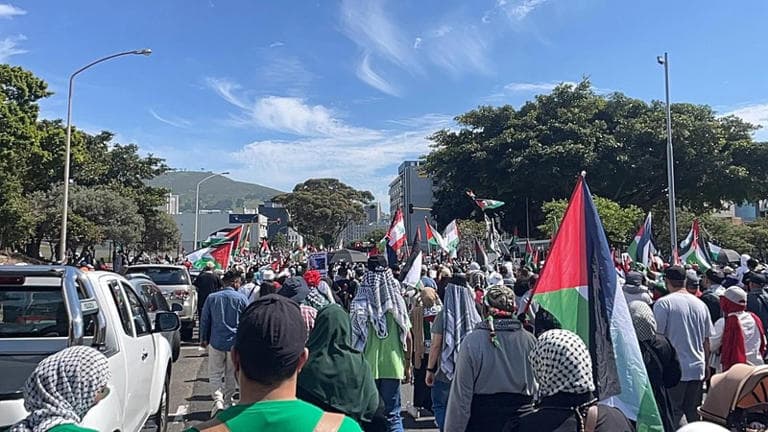
Iranians prioritize state institutions amid calls for political change
By Zara Williams
January 3, 2026
In a recent analysis, Esfandyar Batmanghelidj emphasized the unique position of Iran in the context of political upheaval, contrasting it with the situations in Venezuela, Syria, and Afghanistan. He noted that Iranians maintain connections to functional state institutions, which serve as vital sources of services, welfare, and employment. This relationship has significant practical and material value for the populace, as evidenced by various national representative surveys, including those conducted by Gallup and the World Values Survey, which indicate that many Iranians hold positive views of key state institutions, including the local police and judiciary.
Key Details
Batmanghelidj pointed out that despite the poor stewardship of the Islamic Republic"s leaders over the last decade, state institutions have persisted due to their historical political cultures rooted in the foundation of the modern Iranian state. He raised the critical question of whether Iran could undergo a revolution without jeopardizing the survival of these institutions.
He argued that the continuity observed in Iran since the 1979 Islamic Revolution suggests that it is possible to achieve political change without dismantling these institutions. However, he cautioned that revolutions often lead to unforeseen consequences, particularly in the Middle East, where political instability can invite foreign intervention or result in the emergence of new authoritarian regimes. Batmanghelidj referenced the Iran-Iraq War, which was triggered by the Islamic Revolution, as an example of the potential dangers of political upheaval.
He expressed concerns about the potential for external actors, such as Israel or the United States, to exploit political instability in Iran. Additionally, he highlighted the risks of separatism and terrorism, questioning what would happen if the Islamic Revolutionary Guard Corps (IRGC) sought to consolidate power in response to perceived threats.
Moreover, Batmanghelidj noted that even successful revolutions can struggle with the process of institutional renewal and reform. He raised specific challenges regarding potential reforms in subsidies, pensions, healthcare, and education in a post-revolutionary context, emphasizing that these reforms are notoriously difficult to implement due to the current distribution of wealth and power in Iran.
Despite these challenges, Batmanghelidj expressed optimism about Iran"s future. He clarified that his analysis is not intended to suggest that the Iranian people should abandon their aspirations for fundamental political change due to perceived risks. Instead, he urged a realistic understanding of the stakes involved in the pursuit of political transformation.
He pointed out that the cautious approach many Iranians exhibit towards revolutionary change is not solely a reflection of the power dynamics between the state and society but also stems from a genuine concern for preserving the functionality of the Iranian state and its public administration. Civil servants, he noted, are striving to address the country"s numerous challenges while facing significant limitations.
Ultimately, Batmanghelidj concluded that Iranians are currently unwilling to risk the destruction of the institutions upon which they rely to eliminate a political class they find ineffective. The ongoing protests in Iran, which have not escalated into a full-scale revolution, reflect this reality. He suggested that the strategy of avoiding outright revolution does not diminish the significance of these protests, even if they do not lead to a historical turning point.
Background
Esfandyar Batmanghelidj"s insights come at a time when Iran is grappling with various socio-political challenges. The Islamic Republic has faced significant internal dissent, particularly in response to economic hardships and political repression. The historical context of the 1979 Islamic Revolution and subsequent events, including the Iran-Iraq War, shape the current political landscape and the public"s perception of state institutions.
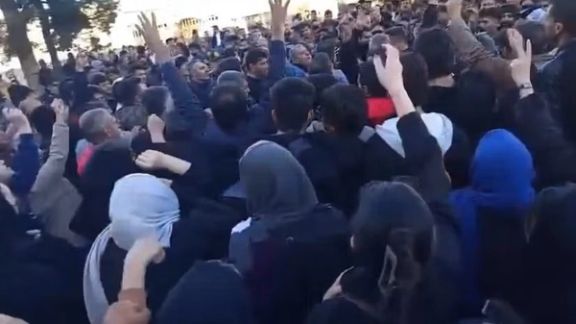
Image for Iranians prioritize state institutions amid calls for political change
What"s Next
The future of Iran"s political landscape remains uncertain. As the public continues to express discontent through protests, the balance between seeking reform and preserving state institutions will be a critical factor in determining the country"s trajectory. The ongoing situation warrants close observation, as the interplay between civil society and state institutions will shape the potential for political change in Iran.
For further insights into political dynamics in similar contexts, see recent developments regarding Venezuela"s political situation.
![[Video] Armed clashes erupt between anti-regime protestors and security forces in Ilam](/_next/image?url=%2Fapi%2Fimage%2Fthumbnails%2Fthumbnail-1767564039752-eaug9f-thumbnail.jpg&w=3840&q=75)

![[Video] Colombian President Gustavo Petro challenges Trump on potential arrest](/_next/image?url=%2Fapi%2Fimage%2Fthumbnails%2Fthumbnail-1767559866966-y4jav-thumbnail.jpg&w=3840&q=75)