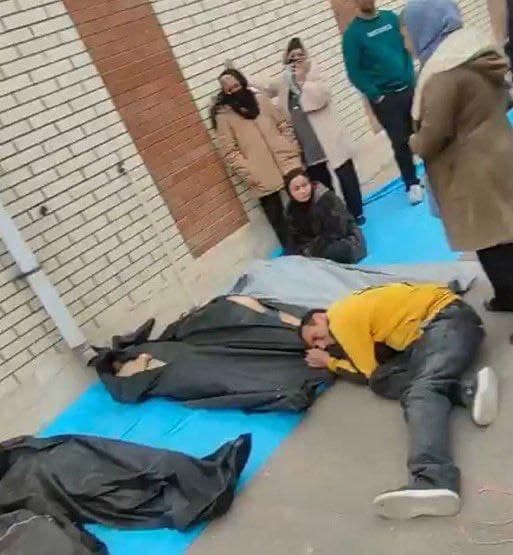
Leaked Footage Reveals Disturbing Scenes at Tehran"s Kahrizak Forensic Medicine Center Amid Ongoing Protests
Recent leaked footage from Iran"s Kahrizak Forensic Medicine Center in Tehran has surfaced, depicting harrowing scenes of dozens of bodies, including victims reportedly killed by live ammunition and pellet gunfire. These images come in the wake of nationwide anti-government protests that have erupted across Iran, primarily fueled by severe economic hardship and widespread discontent with the ruling authorities.
Key Details
According to eyewitness accounts and reports from various human rights organizations, the Kahrizak Forensic Medicine Center is currently overwhelmed with casualties. Families are desperately searching for their loved ones among the deceased, highlighting the human toll of the ongoing unrest. A screenshot of a database from the facility indicates that at least 250 victims have been recorded, although the actual death toll is believed to be significantly higher. Estimates from sources such as the Human Rights Activists News Agency (HRANA) suggest that the number of fatalities could range from over 100 to potentially thousands in recent days. However, verification of these figures is complicated by internet restrictions imposed by the Iranian government, which have hindered communication and information dissemination.
The protests, which have been characterized by their intensity and scale, are a response to a combination of economic crises, including high inflation rates, unemployment, and a general decline in living standards. The Iranian government has faced increasing criticism for its handling of the economy, leading to widespread calls for reform and accountability. The use of live ammunition and pellet guns by security forces against protesters has raised serious concerns regarding human rights violations and the government"s approach to dissent.
Background
The Kahrizak Forensic Medicine Center has a history of being associated with state responses to civil unrest in Iran. It has previously been reported as a site where victims of political violence are taken, and its facilities have been described as inadequate to handle the influx of casualties during periods of unrest. The current situation marks a significant escalation in the ongoing protests that have been occurring intermittently over the past few years, particularly since the 2019 protests sparked by fuel price hikes.
Human rights organizations have been vocal about the need for accountability and transparency in the Iranian government"s actions. Reports of excessive force used against protesters have drawn international condemnation, and calls for investigations into the deaths of protesters have intensified. The Iranian authorities, however, have often dismissed these claims, attributing the unrest to foreign interference and internal sabotage.
What"s Next
The implications of the current situation in Iran are profound. As protests continue and the death toll rises, the potential for further unrest remains high. The Iranian government may face increased pressure both domestically and internationally to address the grievances of its citizens and to reform its approach to governance. The international community is watching closely, and any further escalation could lead to increased sanctions or diplomatic actions against the Iranian regime.
As previously reported, similar situations have unfolded in other countries facing economic turmoil and governmental repression, underscoring a global trend of civil unrest in response to perceived injustices. For instance, recent developments in Hungary highlight the importance of sovereignty and national governance in the face of external pressures, a theme that resonates with the current climate in Iran. [Video] Hungary prepares for new era of nations, emphasizes sovereignty.
As the situation develops, the need for accurate information and verification of facts remains critical. The ongoing protests and the associated human rights violations will likely continue to draw attention from global human rights organizations and foreign governments, further complicating Iran"s political landscape.

![[Video] NATO SACEUR Gen. Grynkewich warns of growing collaboration among Russia, China, Iran, and North Korea](/_next/image?url=%2Fapi%2Fimage%2Fthumbnails%2Fthumbnail-1768167672805-ipote-thumbnail.jpg&w=3840&q=75)
![[Video] Scuffle breaks out between Trump supporters and Anti-ICE protesters in Times Square](/_next/image?url=%2Fapi%2Fimage%2Fthumbnails%2Fthumbnail-1768165958203-hgcgb-thumbnail.jpg&w=3840&q=75)