Pressure Buildup in Permian Basin Raises Concerns Over Wastewater Injection
As of January 8, 2026, the Permian Basin, the largest oil field in the United States, is facing significant challenges due to the injection of wastewater by shale drillers. This practice has led to increased pressure within the geological formations of West Texas and New Mexico, raising alarms about the future of fossil fuel production in the region.
Key Details
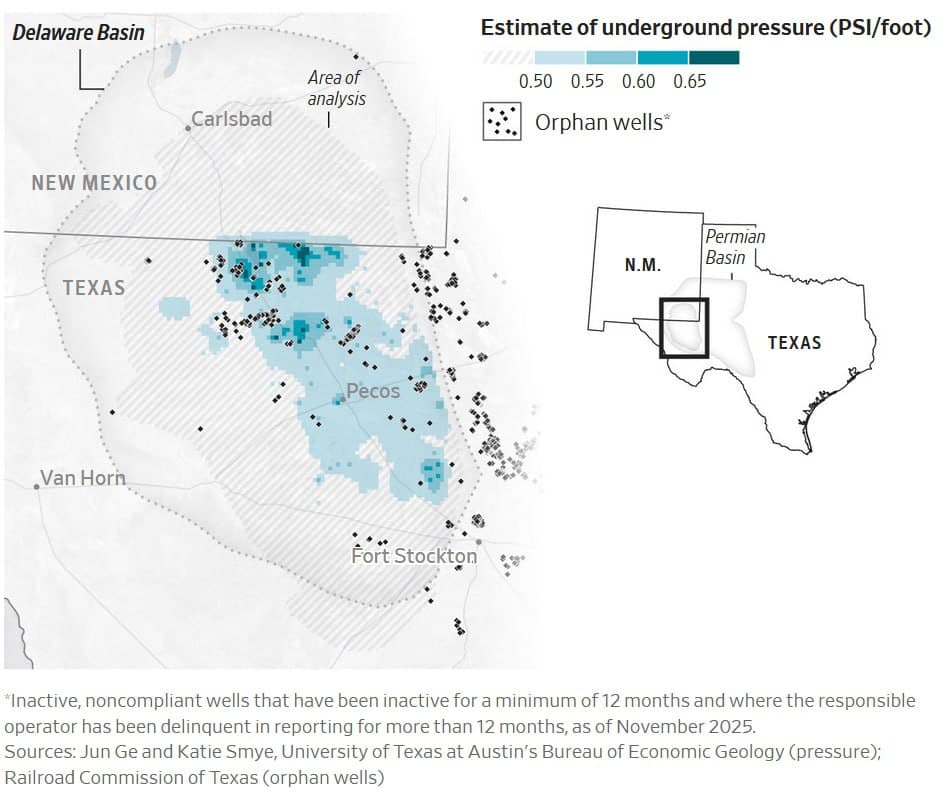
The Permian Basin is a crucial area for oil production, accounting for approximately 50% of the crude oil output in the United States. In addition to crude oil, these operations generate substantial amounts of toxic, salty wastewater, which companies typically inject back into the ground. However, recent reports indicate that some reservoirs designed to collect this wastewater are overflowing, leading to hazardous conditions.
According to a Wall Street Journal analysis, pressure levels in the injection reservoirs of the Permian Basin have reached alarming heights, with measurements as high as 0.7 pounds per square inch per foot. This is particularly concerning because Texas regulators have indicated that when pressure exceeds 0.5 pounds per square inch per foot, there is a risk that the liquid can find pathways to the surface, potentially contaminating underground sources of drinking water.
Greg Perrin, the general manager of the groundwater conservation district in Reeves County, Texas, expressed his concerns, stating, "It’s one of the many things that keep me up at night." Reeves County is notable for being one of the areas where companies are injecting some of the largest volumes of wastewater.
The consequences of this pressure buildup are severe. The phenomenon has resulted in the emergence of geysers from ancient wellbores, which can incur cleanup costs amounting to millions of dollars. Additionally, companies are facing increased drilling hazards, which complicate operations and inflate costs. There are also reports of wastewater infiltrating oil and gas reservoirs, further complicating the situation for producers.
Background
The Permian Basin has long been a focal point for oil production in the United States, with its geological formations providing a rich source of crude oil. However, the practice of injecting wastewater back into the ground has become a contentious issue, particularly as environmental concerns mount. The region"s geology is now showing signs of strain, with many areas appearing to be on the verge of geological malfunction.
Researchers from the University of Texas at Austin’s Bureau of Economic Geology have been closely monitoring these developments, providing critical data that informs both industry practices and regulatory measures. The implications of these findings extend beyond the oil industry, potentially affecting local communities and their access to clean water.
Impact
The ongoing situation in the Permian Basin raises significant questions about the sustainability of current oil extraction practices. As pressure continues to build within the geological formations, the risk of contamination of drinking water sources becomes increasingly pronounced. This could lead to stricter regulations and a reevaluation of wastewater management practices within the industry.
As previously reported, the balance between fossil fuel production and environmental safety remains a contentious issue, and the developments in the Permian Basin could serve as a critical case study for similar situations across the country.
For more on related coverage, see recent developments in the political landscape.
![[Video] Mount Etna erupts in Sicily, lava reaches 400 meters, yellow alert issued](/_next/image?url=%2Fapi%2Fimage%2Fthumbnails%2Fthumbnail-1766917884234-2sqn18-thumbnail.jpg&w=3840&q=75)
![[Video] Hawaii's Kilauea volcano erupts, fountains reach 70 ft, USGS reports](/_next/image?url=%2Fapi%2Fimage%2Fthumbnails%2Fthumbnail-1766574042820-tucull-thumbnail.jpg&w=3840&q=75)

![[Video] Tehran Mayor reports protesters attacked hospitals, banks, and mosques](/_next/image?url=%2Fapi%2Fimage%2Fthumbnails%2Fthumbnail-1767958840054-91un3e-thumbnail.jpg&w=3840&q=75)