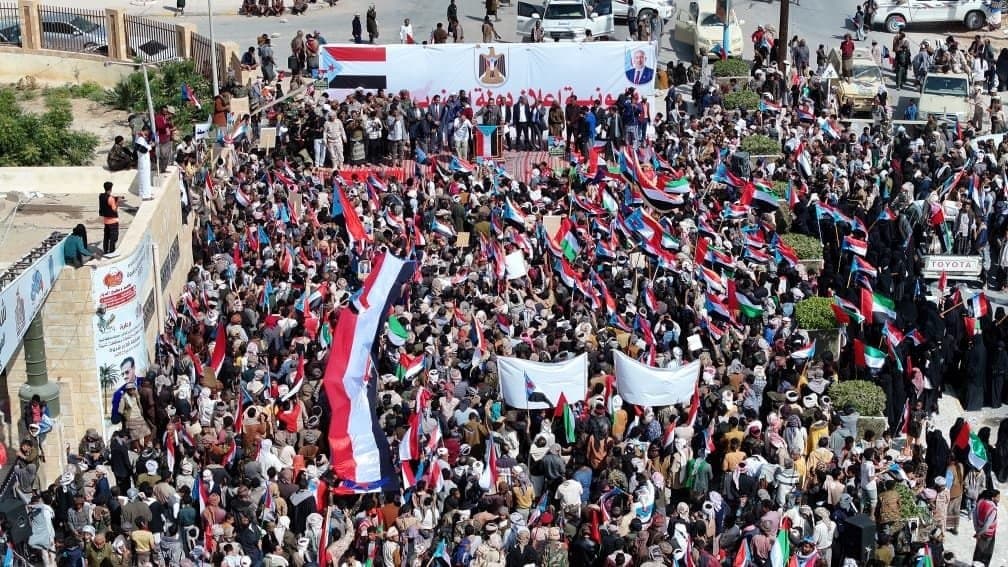
State of South Arabia Declares Independence with Aden as Capital
On January 2, 2026, the newly declared State of South Arabia announced its independence, establishing Aden as its capital. This declaration marks a significant political development in the region, as the state asserts its full sovereignty and outlines its governance structure and commitments to international law.
Key Details
The State of South Arabia is defined by its adherence to the internationally recognized borders of the former People’s Democratic Republic of Yemen. Arabic is designated as the official language, while Islam is recognized as the state religion, with Islamic Sharia serving as the principal source of legislation.
The political framework of South Arabia emphasizes the separation of powers within a civil, democratic state. Governance is rooted in the principles of popular will, rule of law, justice, and political pluralism. The ultimate authority lies with the people, who will have the opportunity to determine the nature of the political system through a general referendum following a transitional period.
A transitional period of two years has been established to facilitate the completion of legal tasks and the construction of state institutions. This transitional legislative authority may extend the period once for an equal duration if deemed necessary. The goal of this phase is to lay the groundwork for a civil, democratic state that adheres to the rule of law and is guided by the principles of good governance.
The State of South Arabia has committed to the Charters of the United Nations and the League of Arab States, pledging to uphold the Universal Declaration of Human Rights and recognized principles of international law. The state aims to foster international relations based on respect for these charters and laws.
In terms of economic policy, the State of South Arabia adopts a free-market approach aimed at enhancing the standard of living for its citizens. The economic strategy focuses on leveraging national resources to create employment opportunities and promote development. Public property is designated for the benefit of the people and cannot be exploited for purposes outside its intended use. Private property is also protected by law, with restrictions on infringement only applicable in legally defined circumstances.
The state has assured its commitment to existing investment contracts and international partnerships, which will be reviewed to ensure they serve the best interests of the populace. It guarantees protection for all legally acquired rights of individuals and companies, regardless of nationality. Notably, there will be no automatic assumption of debts or contracts from previous regimes unless they undergo an independent legal review approved by the state, with laws in place to regulate settlement or renegotiation to ensure fairness and economic stability.
The armed forces and security services of the State of South Arabia are tasked with the protection of the state and its territorial integrity, as well as upholding the constitution and the law. The state is the sole authority responsible for establishing armed forces, and the formation of any military or paramilitary groups outside its framework is strictly prohibited. The government is committed to combating terrorism and extremism in all forms, including their financing, and will operate under a comprehensive national security strategy in collaboration with regional and international partners.
The family is recognized as the fundamental unit of South Arabian society, with the state pledging to protect motherhood, childhood, adolescents, and youth. Furthermore, the full and meaningful participation of South Arabian women in all fields is guaranteed.
In terms of civil rights, all citizens are declared equal before the law, enjoying the same rights and duties without discrimination. The state guarantees political, economic, cultural, and social rights for all citizens and fully adheres to the rights and freedoms outlined in the Universal Declaration of Human Rights. It also recognizes the International Covenants on Civil, Political, Economic, Social, and Cultural Rights as essential references for citizenship rights.
Background
The declaration of independence for the State of South Arabia follows a period of political instability in the region, particularly in the context of the ongoing conflict in Yemen. The Southern Transitional Council, a key political entity in southern Yemen, has been advocating for greater autonomy and has played a significant role in the push for the establishment of the State of South Arabia.
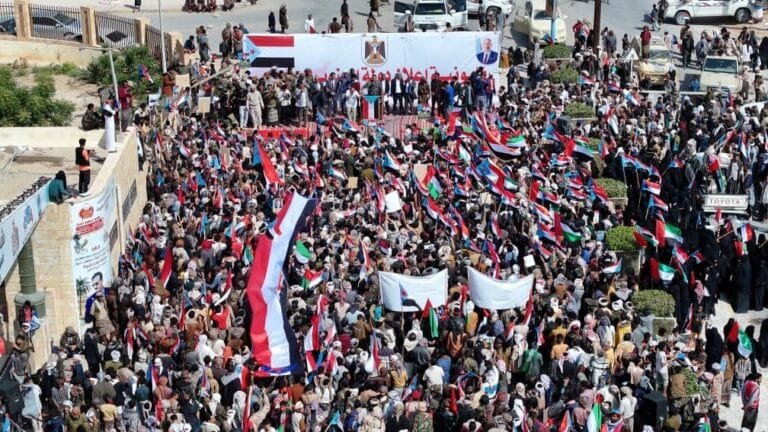
Image for State of South Arabia Declares Independence with Aden as Capital
What"s Next
The establishment of the State of South Arabia is expected to have significant implications for the region, particularly in terms of governance, economic development, and international relations. As the transitional period unfolds, the focus will be on building state institutions and ensuring the protection of rights for all citizens. The international community will be closely monitoring these developments, particularly in relation to the state"s commitment
![[Video] Protestors burn flags of the Islamic Republic across Iran](/_next/image?url=%2Fapi%2Fimage%2Fthumbnails%2Fthumbnail-1767385839575-kvfedm-thumbnail.jpg&w=3840&q=75)
![[Video] Mass protests continue across Iran with hundreds of thousands participating](/_next/image?url=%2Fapi%2Fimage%2Fthumbnails%2Fthumbnail-1767385240292-skhag-thumbnail.jpg&w=3840&q=75)