By Dr. Grace Kim
Date: December 19, 2025
In a striking illustration of the challenges faced by top students in the United States, two graduate students from Harvard University, both identified as white males, encountered significant barriers in securing employment in their home country. Their experiences highlight broader issues within the U.S. educational and job market landscape.
Key Details
According to a recent account from a Harvard educator, two of the best graduate students from the prestigious institution faced difficulties in finding jobs after completing their studies. One of these students made the decision to relocate to Germany, a choice that was later described as a "bad idea." The other student, however, moved to Hong Kong, where he has since emerged as one of the leading historians of his generation, demonstrating the potential for success outside the U.S. academic system.
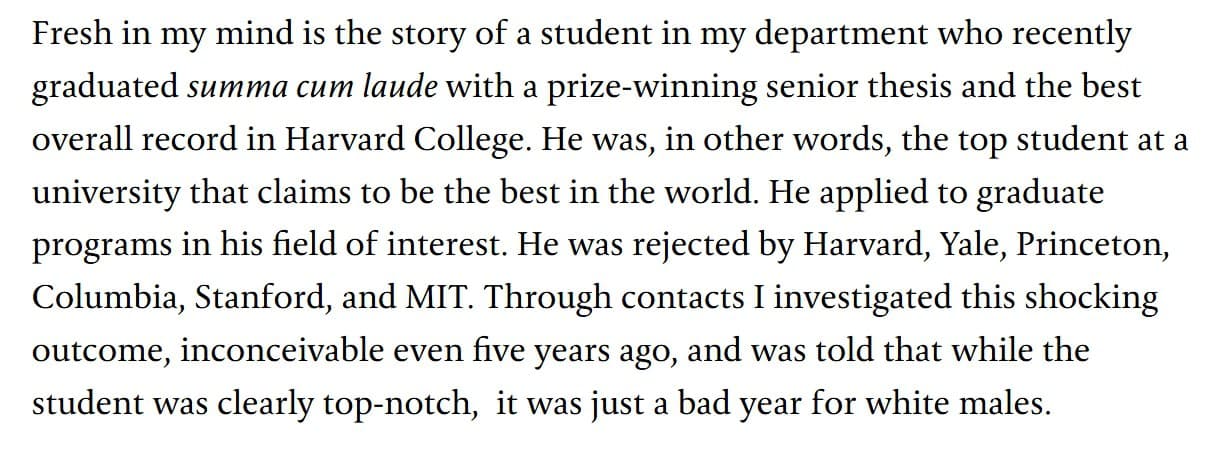
Additionally, in 2020, another exceptional undergraduate student at Harvard, who was recognized as the best student in his graduating class and awarded a prize for having the "best academic record," also faced challenges in advancing his education. This student was unable to gain admission into the graduate program of his choice, underscoring the competitive and often exclusionary nature of graduate school admissions in the United States.
Background
The experiences of these students raise critical questions about the admissions processes at elite universities and the implications of affirmative action policies. Critics argue that such policies may inadvertently disadvantage high-achieving students based on their race or gender, leading to a perception that the U.S. educational system is not fully utilizing its most talented individuals. This sentiment is echoed by those who advocate for a merit-based approach to admissions, emphasizing the need for institutions to prioritize academic excellence regardless of demographic factors.
Moreover, the narrative suggests a growing trend of American talent being attracted to opportunities abroad, particularly in countries like China, which are actively seeking to recruit top scholars and professionals. This trend raises concerns about the long-term implications for the U.S. workforce and its ability to retain its brightest minds in an increasingly competitive global landscape.
What"s Next
The situation presents a critical juncture for U.S. higher education institutions as they navigate the complexities of diversity, equity, and inclusion while also striving to attract and retain the world"s most talented individuals. As universities continue to advocate for the need to bring in the "world"s smartest people" through student visas, it is essential for them to reflect on their own practices and policies regarding admissions and employment opportunities for domestic students.
In light of these developments, it will be important to monitor how institutions respond to these challenges and whether they will implement changes that better support all students, particularly those who have demonstrated exceptional academic performance. The ongoing discourse surrounding affirmative action and its impact on American students, particularly white males, will likely continue to evolve as more individuals share their experiences and seek opportunities beyond U.S. borders.
For further insights into related topics, see our recent developments in political discourse regarding immigration and talent retention.