Trump threatens second phase of strikes if Venezuela"s Rodriguez refuses US terms
On January 3, 2026, President Donald Trump reiterated the United States" stance on Venezuela, indicating that if Delcy Rodriguez, the current President of Venezuela and former Vice President under Nicolás Maduro, does not capitulate and agree to U.S. terms, the country may escalate its military actions. Rodriguez has reportedly refused to comply with U.S. demands and is instead calling for the release of Nicolás Maduro, who has been a central figure in Venezuela"s political crisis.
Key Details
Delcy Rodriguez, who has been a prominent figure in the Venezuelan government, is currently serving as the President of Venezuela. She previously held the position of Vice President under Nicolás Maduro, who has been in power since 2013. The political situation in Venezuela has been marked by significant turmoil, with the U.S. government actively opposing Maduro"s regime and supporting opposition leaders.
President Trump’s comments suggest a potential shift in U.S. policy towards Venezuela, indicating that military intervention could be on the table if diplomatic efforts fail. The mention of "second phase of strikes" implies that the U.S. has already engaged in some form of military action or has plans to do so, although specific details about previous strikes were not provided in the original post.
The demand for the release of Nicolás Maduro by Rodriguez highlights the ongoing power struggle within Venezuela. Maduro has faced numerous allegations of human rights abuses and corruption, leading to widespread protests and a humanitarian crisis in the country. The U.S. has imposed sanctions on Maduro and his associates, aiming to pressure the regime into relinquishing power.
Background
The political landscape in Venezuela has been unstable for several years, with economic collapse, hyperinflation, and mass emigration contributing to the crisis. The U.S. has recognized opposition leader Juan Guaidó as the legitimate president of Venezuela since early 2019, a move that has been met with resistance from Maduro"s government. The situation has drawn international attention, with various countries taking sides in the conflict.
In the context of U.S.-Venezuela relations, Trump"s administration has been vocal about its opposition to the Maduro regime. Previous statements have included claims about the sacrifices made by Cubans in support of Maduro, as well as assertions that Cuba"s reliance on Venezuela would lead to its eventual downfall. These comments reflect a broader strategy by the Trump administration to isolate and weaken regimes in Latin America that are viewed as threats to U.S. interests.
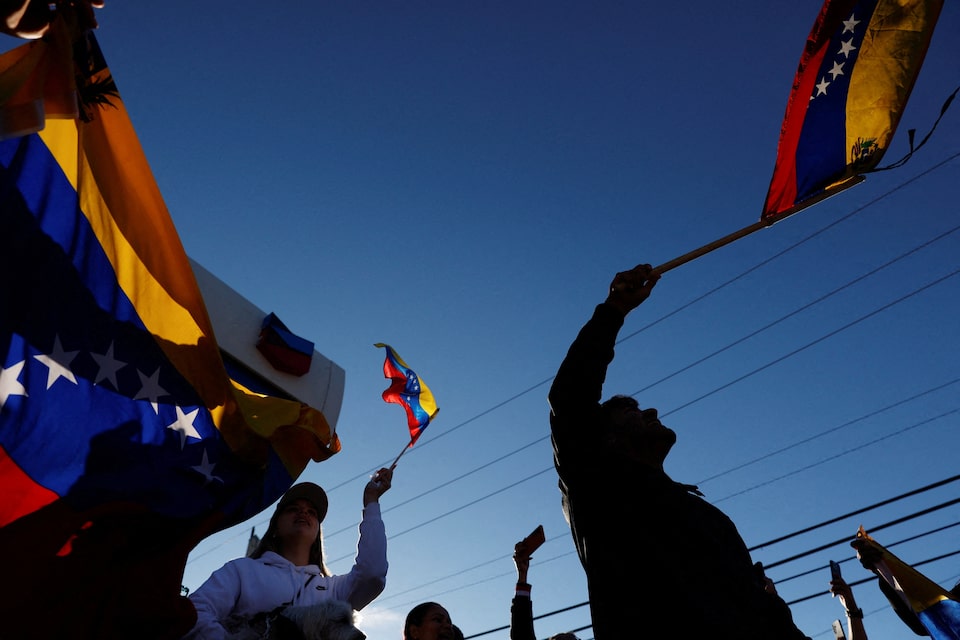
Image for Trump threatens second phase of strikes if Venezuela"s Rodriguez refuses US terms
What"s Next
The refusal of Delcy Rodriguez to agree to U.S. terms could lead to increased tensions between the two nations. The possibility of U.S. troops being deployed in Venezuela represents a significant escalation in the U.S. response to the Maduro regime. As the situation develops, it remains to be seen how both the U.S. and Venezuelan governments will navigate this complex and volatile scenario.
For further insights on related international dynamics, see recent developments regarding global defense spending and proliferation concerns.
![[Video] Trump states U.S. focuses on viable countries and oil production](/_next/image?url=%2Fapi%2Fimage%2Fthumbnails%2Fthumbnail-1767576696579-fmyt7g-thumbnail.jpg&w=3840&q=75)
![[Video] Trump supports U.S. operation in Colombia, criticizes its leadership](/_next/image?url=%2Fapi%2Fimage%2Fthumbnails%2Fthumbnail-1767576683922-ze0a3p-thumbnail.jpg&w=3840&q=75)
![[Video] Trump claims Greenland is vital for national security due to foreign ships](/_next/image?url=%2Fapi%2Fimage%2Fthumbnails%2Fthumbnail-1767576667292-4wqv6x-thumbnail.jpg&w=3840&q=75)