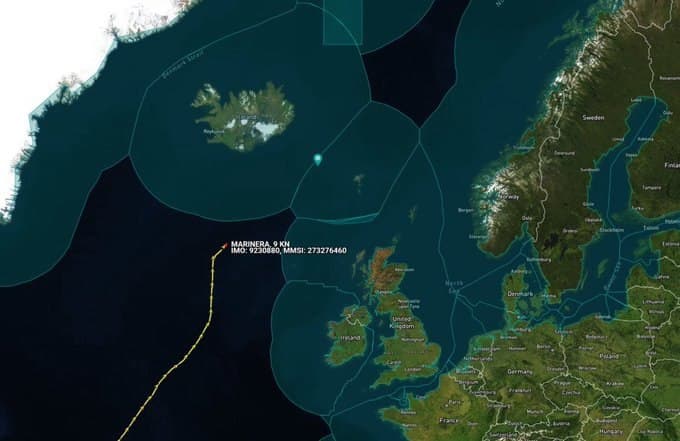
US Maintains Military Presence in Greenland Under 1951 Defense Agreement
Greenland"s strategic importance has been underscored by its geographical positioning, which serves as a critical link in the (Greenland-Iceland-UK) gap, a significant maritime passage to the Arctic. This area is vital for naval traffic, and NATO has been actively monitoring this region, utilizing radar and surveillance aircraft based in Greenland to oversee both naval traffic through this gap and the Transpolar Sea Route.
Key Details
The 1951 Defense of Greenland Agreement is a pivotal treaty between the United States and Denmark, allowing the U.S. to maintain a military presence on the island of Greenland. This agreement has facilitated the establishment of U.S. military operations at Thule Air Base, which has been in operation since the Cold War era. Thule Air Base is strategically located in the northern part of Greenland and plays a crucial role in U.S. military and surveillance operations in the Arctic region.
In discussions surrounding Greenland"s resources, there have been suggestions that purchasing the territory could provide access to valuable natural resources. However, it is noted that acquiring the mineral rights or rights to extract resources is a more feasible and cost-effective approach than purchasing the territory itself. This method allows for the extraction of resources without the extensive financial and logistical burdens associated with territorial governance.
Background
Greenland, an autonomous territory within the Kingdom of Denmark, has been a focal point of geopolitical interest, particularly in the context of Arctic navigation and resource extraction. The strategic significance of Greenland has increased in recent years due to climate change, which has opened up new shipping routes and access to previously untapped natural resources. The U.S. military presence in Greenland is part of a broader strategy to secure American interests in the Arctic, amid growing competition from other nations, including Russia and China.
The 1951 Defense of Greenland Agreement was established during a time of heightened tensions in the Cold War, reflecting the U.S. commitment to defending its interests in the Arctic region. The agreement has been a cornerstone of U.S.-Danish relations and has facilitated ongoing military collaboration between the two nations.
What"s Next
As geopolitical dynamics continue to evolve, the implications of the U.S. military presence in Greenland and the ongoing monitoring of Arctic maritime routes will remain significant. The Arctic is expected to become increasingly important for global trade and military strategy, making Greenland"s role even more critical. The discussions surrounding resource extraction rights versus territorial acquisition will likely continue as nations seek to navigate the complexities of Arctic governance and resource management.
For more insights on Greenland"s geopolitical significance, see recent developments regarding potential scenarios for Greenland"s future relationship with the United States. Additionally, the EU"s stance on Greenland"s sovereignty is highlighted in a recent video featuring EU Council President António Costa.

![[Video] Alleged Oreshnik IRBM strike hits critical infrastructure in Lvov region](/_next/image?url=%2Fapi%2Fimage%2Fthumbnails%2Fthumbnail-1767913279701-cqsxti-thumbnail.jpg&w=3840&q=75)

![[Video] Syrian government troops enter former SDF military point in al-Ashrafiyeh](/_next/image?url=%2Fapi%2Fimage%2Fthumbnails%2Fthumbnail-1767913850617-2iw1eu-thumbnail.jpg&w=3840&q=75)