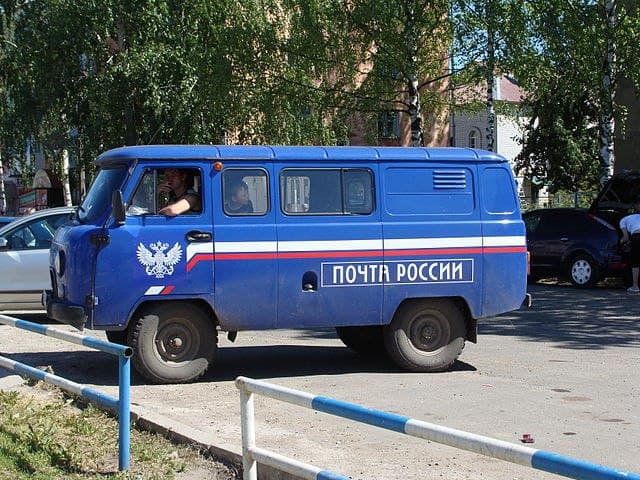
40,000 Employees Leave Russian Post Due to Low Wages and Increasing Workloads
Approximately 40,000 employees have departed from Russian Post over the past year, driven by low wages and escalating workloads, according to reports from the Russian media outlet Mash and various regional news sources. This significant workforce reduction highlights the growing challenges faced by the postal service in Russia, which has been struggling to retain staff amid a competitive delivery market.
Key Details
Reports indicate that employees at Russian Post are experiencing not only low salaries but also increased responsibilities. Staff members are now required to meet sales quotas and key performance indicators (KPIs), which adds to their workload. In Moscow, the average salary for branch workers is approximately 43,000 Russian rubles (RUB), while in other regions of Russia, the average salary drops to under 25,000 RUB. This disparity in wages is contributing to the dissatisfaction among employees, prompting many to seek employment elsewhere.
The postal service is also facing a decline in parcel volumes, which is further exacerbated by competition from faster delivery services. As a result, Russian Post has been forced to implement branch closures, reduce operating hours, and deal with delays in deliveries. These operational challenges not only affect the efficiency of the service but also contribute to the overall dissatisfaction among employees.
Background
Russian Post, the national postal service of Russia, has been a critical component of the country"s logistics and communication infrastructure. However, in recent years, it has struggled to adapt to the changing landscape of the delivery market, where private companies are increasingly offering faster and more efficient services. The rise of e-commerce has intensified competition, leading to a decrease in the volume of parcels handled by Russian Post.
The departure of 40,000 employees is a stark indicator of the systemic issues within the organization. The combination of low wages, increased workloads, and declining service quality has created a challenging environment for workers. As previously reported, similar situations have arisen in various sectors where employees face unsustainable working conditions, leading to significant turnover rates.
Impact
The mass exodus of employees from Russian Post raises concerns about the future viability of the service. With fewer workers to handle the increasing demands of parcel delivery, the quality of service is likely to continue deteriorating. This could lead to further branch closures and a reduction in service availability, particularly in rural areas where postal services are already limited.
As Russian Post grapples with these challenges, the implications for customers and the broader logistics industry are significant. The inability to retain staff may hinder the organization"s capacity to compete effectively against private delivery services, which are often more agile and responsive to market demands. The situation at Russian Post serves as a cautionary tale for other sectors facing similar labor challenges, emphasizing the importance of addressing employee needs to maintain a stable workforce.
For more on related coverage, see our article on recent developments regarding labor issues in various sectors.
![[Video] Farmers and police clash in front of the EU headquarters](/_next/image?url=%2Fapi%2Fimage%2Fthumbnails%2Fthumbnail-1766084505540-ryb3v-thumbnail.jpg&w=3840&q=75)
![[Video] Farmers and police clash in front of EU headquarters](/_next/image?url=%2Fapi%2Fimage%2Fthumbnails%2Fthumbnail-1766079079849-hdt2de-thumbnail.jpg&w=3840&q=75)
![[Video] Thousands of Farmers Protest EU-Mercosur Trade Deal in Brussels](/_next/image?url=%2Fapi%2Fimage%2Fthumbnails%2Fthumbnail-1766073055898-6dd2ze-thumbnail.jpg&w=3840&q=75)
![[Video] Nick Fuentes claims White Genocide is worse than 9/11 for America](/_next/image?url=%2Fapi%2Fimage%2Fthumbnails%2Fthumbnail-1766580662650-714v-thumbnail.jpg&w=3840&q=75)


![[Video] Hawaii's Kilauea volcano erupts, fountains reach 70 ft, USGS reports](/_next/image?url=%2Fapi%2Fimage%2Fthumbnails%2Fthumbnail-1766574042820-tucull-thumbnail.jpg&w=3840&q=75)