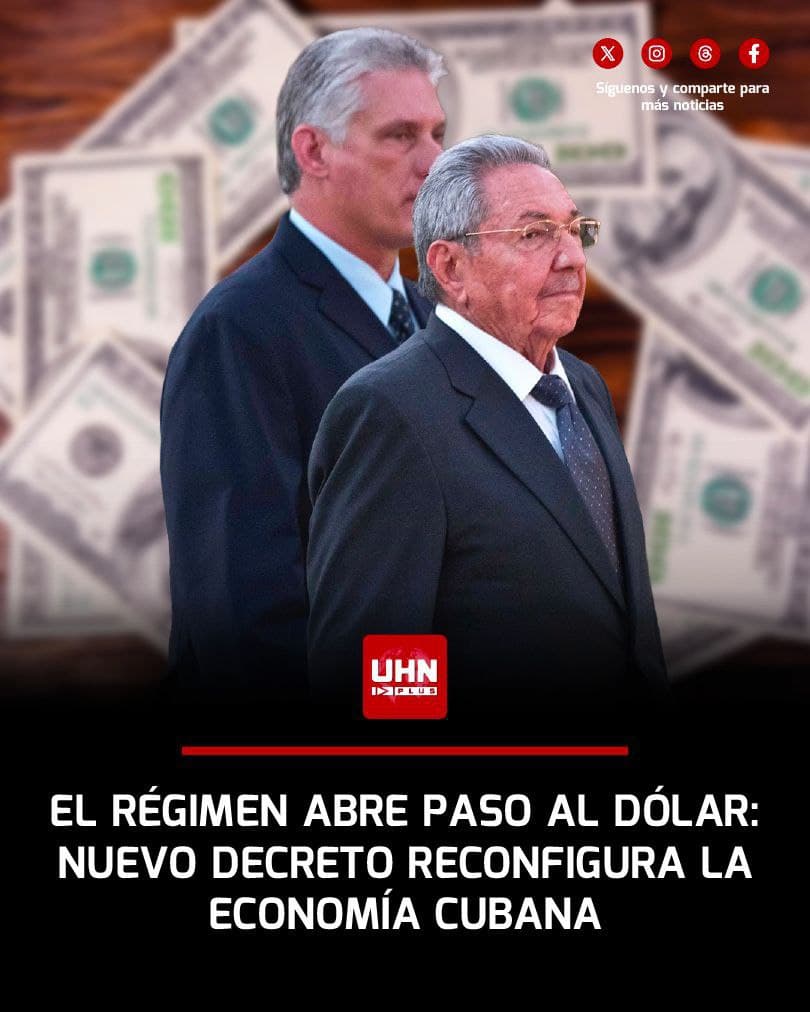
Title: Cuba Enacts Partial Dollarization Amid Economic Crisis
On December 14, 2025, the Cuban government officially initiated a significant economic shift by enacting Decree-Law 113/2025, which allows for partial dollarization within the country. This move marks a pivotal moment in Cuba"s economic policy, enabling the use of foreign currencies, particularly the U.S. dollar, for internal transactions. The decree empowers the Central Bank of Cuba to recognize foreign bills as legal tender in specific situations, while also granting the Minister of Economy the authority to determine which entities can operate in hard currency.
Key Details
The implementation of Decree-Law 113/2025 is set to take effect on December 17, 2025. Under this new framework, micro, small, and medium-sized enterprises (mipymes), cooperatives, and various economic actors will be permitted to open accounts in foreign currencies. These entities will also have the ability to retain earnings and conduct transactions in foreign currency. However, it is important to note that this model remains entirely under state control, reflecting the ongoing crisis of the Cuban peso and the increasing prevalence of covert dollarization within the economy.
The Cuban peso has faced significant devaluation in recent years, leading to a growing reliance on foreign currencies among the population. The introduction of partial dollarization is seen as a response to the economic challenges facing the nation, including inflation and shortages of basic goods. By allowing transactions in foreign currency, the Cuban government aims to stabilize its economy and provide a more viable means for citizens and businesses to engage in commerce.
Additionally, the decree highlights the Cuban government"s recognition of the need to adapt its economic policies in light of the current financial landscape. The decision to allow foreign currency transactions is a notable departure from the strict monetary policies that have characterized the Cuban economy for decades.
Background
Cuba"s economy has been under significant strain, exacerbated by the ongoing U.S. embargo and the impact of the COVID-19 pandemic. The country has struggled with food shortages, rising prices, and a lack of foreign investment. The introduction of Decree-Law 113/2025 is part of a broader strategy to address these economic challenges and improve the living conditions of Cuban citizens.
The concept of dollarization is not new in Latin America, with several countries having adopted similar measures in response to economic crises. However, Cuba"s unique political and economic context adds complexity to its implementation. The government"s control over the dollarization process aims to maintain state authority while attempting to alleviate the economic hardships faced by its citizens.
What"s Next
The enactment of partial dollarization is expected to have significant implications for Cuba"s economy. By allowing the use of foreign currencies, the government hopes to attract investment and stimulate economic activity. However, the success of this initiative will depend on various factors, including the government"s ability to manage the transition effectively and address the underlying issues contributing to the economic crisis.
As Cuba moves forward with this new economic policy, it will be crucial to monitor its impact on the daily lives of citizens and the overall economic landscape. The partial dollarization could serve as a critical step toward economic recovery, but it also raises questions about the future of the Cuban peso and the long-term sustainability of the country"s economic model.
For further insights into related developments, see our coverage on recent developments in global politics and their potential implications for economies worldwide.
![[Video] Cuban Dictator Díaz-Canel confirms widespread economic collapse and food shortages](/_next/image?url=%2Fapi%2Fimage%2Fthumbnails%2Fthumbnail-1765770709836-fe9tdo-thumbnail.jpg&w=3840&q=75)