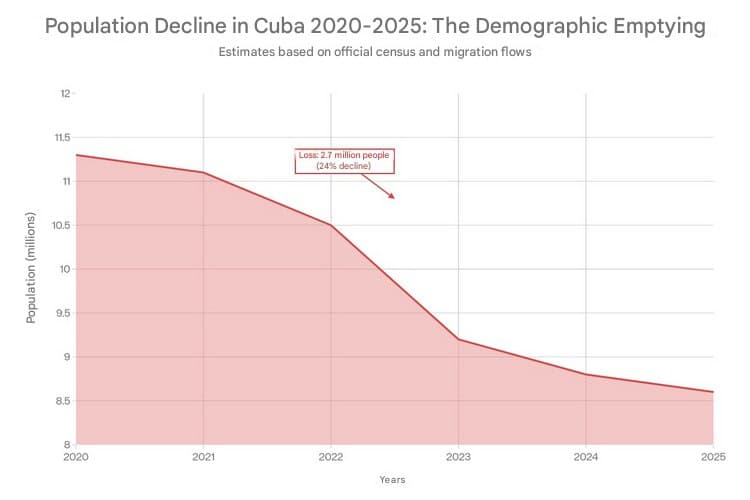
Cuba Faces 24% Population Decline, Losing 2.7 Million People by 2025
As Cuba grapples with a significant demographic crisis, estimates indicate that the island nation is set to experience a staggering population decline of 24% by the year 2025. This decline translates to a loss of approximately 2.7 million people, a situation that has been described as a "demographic emptying" of the country. The projections are based on official census data and migration flows, highlighting the urgent need for attention to this pressing issue.
Key Details
The anticipated population decline in Cuba is unprecedented in modern history. According to estimates, Cuba"s population is expected to decrease from its current figures, resulting in a total loss of 2.7 million residents over a five-year period from 2020 to 2025. This decline is reminiscent of historical events, notably the Irish Potato Famine, which saw a similar percentage drop in population, estimated between 20% to 25%.
The demographic changes in Cuba are attributed to various factors, including high rates of emigration and low birth rates. The ongoing economic challenges, coupled with political instability, have prompted many Cubans to seek better opportunities abroad. This mass exodus has been characterized as a "Great Reversal," marking a significant turning point in the nation’s demographic landscape. Experts suggest that this decline will be viewed as an epoch-defining moment for Cuba, given its magnitude and implications for the future.
As of the end of 2025, the population decline is expected to have profound effects on various sectors, including the economy, healthcare, and social services. The loss of such a significant portion of the population raises concerns about the sustainability of Cuba"s workforce and the ability of the government to provide essential services to its remaining citizens.
Background
Cuba has faced numerous challenges over the past few decades, including economic sanctions, limited access to resources, and a centralized economy that has struggled to adapt to changing global conditions. The combination of these factors has contributed to a declining birth rate, as many families face economic hardships that discourage larger households.
Additionally, the political landscape in Cuba has led to widespread dissatisfaction among citizens, prompting many to leave in search of better living conditions. The current demographic trends are a reflection of these ongoing issues, as the nation confronts the dual challenges of retaining its population while also addressing the underlying causes of emigration.
What"s Next
The implications of this population decline are far-reaching. As Cuba loses a significant portion of its population, the government will need to implement strategies to address the challenges that arise from a shrinking workforce and an aging population. Policymakers may need to focus on improving economic conditions to encourage families to remain in the country and to attract those who have left to return.
Furthermore, international observers will likely monitor the situation closely, as the demographic changes in Cuba could influence regional dynamics in the Caribbean and beyond. The potential for a continued exodus may also prompt discussions about immigration policies in neighboring countries, as they prepare for the possibility of an influx of Cuban migrants seeking refuge from the ongoing crisis.
As previously reported, similar situations have arisen in other countries facing demographic challenges, highlighting the need for comprehensive policies to address the root causes of population decline. The situation in Cuba serves as a critical reminder of the complexities surrounding migration, economic stability, and social cohesion.
For more on related coverage, see our article on recent developments in global politics that may impact migration trends.