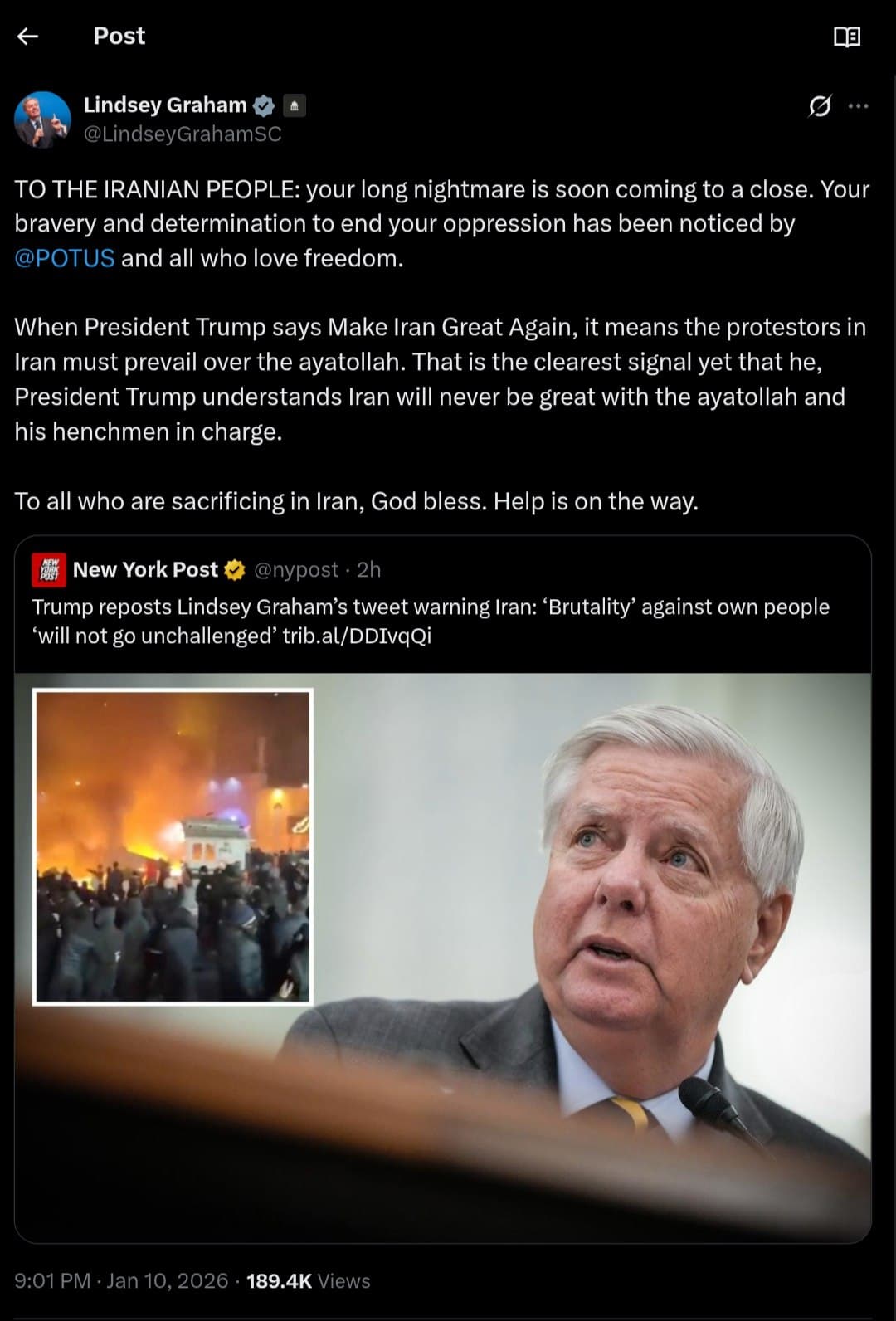
Washington, D.C. — January 10, 2026 — In a powerful message directed towards the Iranian populace, U.S. Senator Lindsey Graham expressed his support for the ongoing protests against the Iranian regime, signaling a potential shift in U.S. foreign policy towards Iran. Graham"s remarks come amidst growing unrest in Iran, where citizens have been demonstrating against the oppressive rule of the ayatollahs.
Key Details
Senator Lindsey Graham, a prominent figure in the Republican Party, addressed the Iranian people through a statement that emphasized their courage in fighting against oppression. He stated, "Your long nightmare is soon coming to a close," highlighting the resilience of the Iranian citizens who have been advocating for freedom and democracy. Graham"s comments were made in the context of President Donald Trump"s support for the Iranian protesters, reinforcing the notion that the current regime is incompatible with a prosperous Iran.
Graham quoted President Trump, who has previously used the slogan "Make Iran Great Again," suggesting that this phrase encapsulates a vision where the Iranian people can thrive without the ayatollah and his associates in power. This statement serves as a clear indication of the U.S. administration"s recognition that the current leadership in Iran is a barrier to the nation"s greatness.
In his message, Graham extended his blessings to those in Iran who are making sacrifices for their freedom, stating, "Help is on the way." This phrase implies potential U.S. support for the protesters, although specific details about the nature of this assistance were not disclosed. The senator"s remarks align with a broader narrative of U.S. support for democratic movements globally.
Background
The protests in Iran have been ongoing for several years, driven by widespread discontent with the government"s policies, economic hardships, and human rights abuses. The Iranian regime, led by the Supreme Leader Ayatollah Ali Khamenei, has faced increasing criticism both domestically and internationally. The U.S. has historically taken a strong stance against the Iranian government, particularly following the U.S. withdrawal from the Joint Comprehensive Plan of Action (JCPOA) in 2018, which aimed to limit Iran"s nuclear capabilities.
Graham"s statements come at a time when the Iranian government is under significant pressure from both internal dissent and external sanctions. The U.S. has been vocal in its support for the Iranian people, with various officials expressing solidarity with the protesters. In recent developments, President Trump has also publicly supported the protests, further solidifying the U.S. stance against the Iranian regime.
What"s Next
As the situation in Iran continues to evolve, the implications of Graham"s statements may lead to increased U.S. involvement in supporting the protesters. The international community is closely monitoring the developments, and further actions from the U.S. government could shape the future of U.S.-Iran relations. The Iranian President Masoud Pezeshkian is scheduled to speak with the people tomorrow, which may provide additional context on the government"s response to the ongoing unrest. For more on this, see our previous reports.
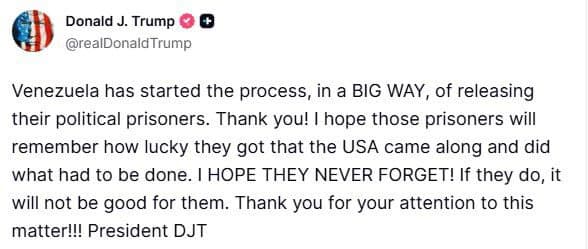
Furthermore, the dynamics of U.S. support for the Iranian people may influence other geopolitical relationships in the region. As previously reported, President Trump has actively engaged with social media platforms to communicate his support for the Iranian protests, including a recent repost of Graham"s tweet on Truth Social, which underscores the administration"s commitment to advocating for freedom in Iran. For more details, refer to our article on recent developments.
![[Video] Crown prince Reza Pahlavi says Trump ready to help national revolution](/_next/image?url=%2Fapi%2Fimage%2Fthumbnails%2Fthumbnail-1768101070994-cnnj2-thumbnail.jpg&w=3840&q=75)
![[Video] Thousands of Irish farmers protest Mercosur trade deal](/_next/image?url=%2Fapi%2Fimage%2Fthumbnails%2Fthumbnail-1768083678037-nzksz-thumbnail.jpg&w=3840&q=75)