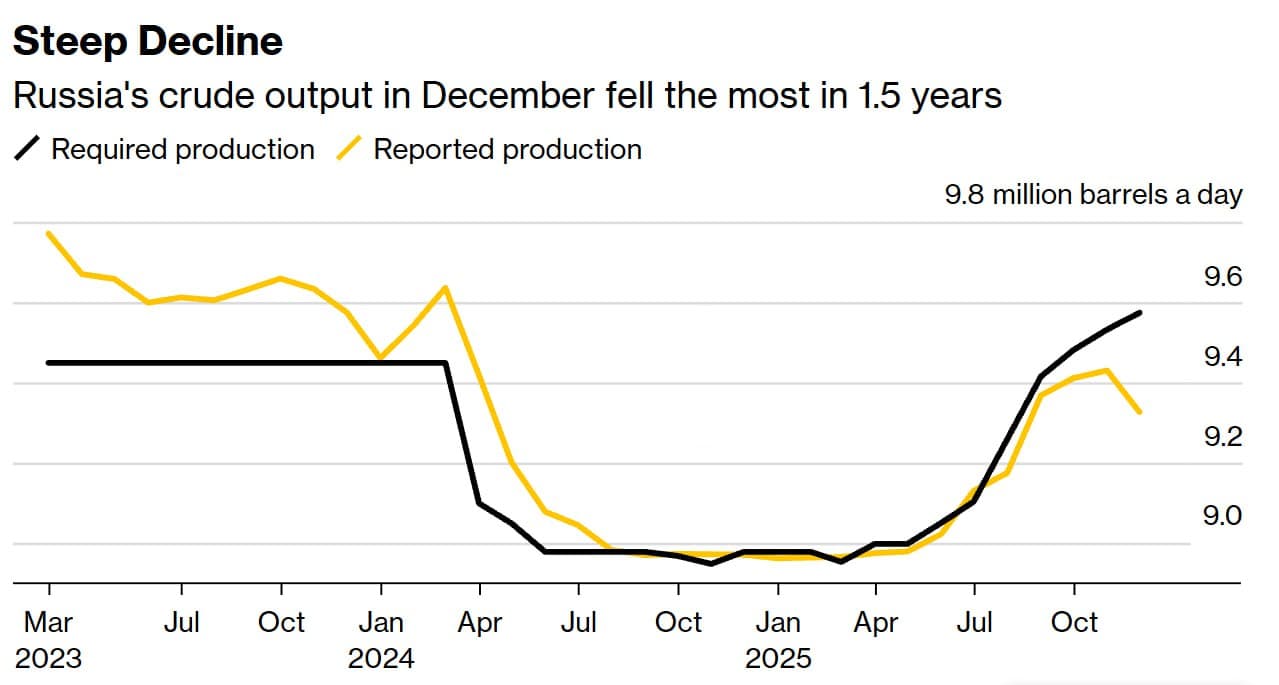
Russia"s Crude Oil Output Drops to 9.326 Million BPD in December
Russia"s crude oil production experienced its most significant decline in 18 months during December 2025, as reported by Bloomberg. The decrease is attributed to the impact of Western sanctions and drone attacks from Ukraine targeting the country"s energy infrastructure.
Key Details
In December 2025, Russia"s average crude oil output fell to approximately 9.326 million barrels per day (bpd). This figure represents a reduction of over 100,000 bpd compared to November 2025. Furthermore, it is about 250,000 bpd below Russia"s production quota set by the OPEC+ alliance, which includes several oil-producing nations working together to manage output levels.
The decline in production has led to a backlog of unsold cargoes accumulating at sea. This situation arises as potential buyers exhibit hesitance in purchasing Russian oil, particularly following the imposition of sweeping U.S. sanctions in November 2025. These sanctions specifically targeted major Russian oil producers, including Rosneft and Lukoil, further complicating the country"s ability to sell its crude oil on the international market.
Background
The sanctions imposed by Western nations, particularly the United States, have significantly affected Russia"s oil industry, which is a crucial component of its economy. The sanctions were enacted in response to geopolitical tensions, including the ongoing conflict with Ukraine. The drone attacks on energy infrastructure have compounded the challenges faced by Russian oil producers, leading to operational disruptions and reduced output.
OPEC+, which includes Russia as a key member, has been working to stabilize global oil prices by managing production levels among its member countries. The recent drop in Russian output not only impacts the country"s economy but also has broader implications for global oil markets, where supply and demand dynamics are closely monitored by investors and analysts.
What"s Next
The future of Russia"s oil production remains uncertain as the country navigates the challenges posed by international sanctions and ongoing military conflicts. The accumulation of unsold cargoes at sea indicates a potential shift in the global oil supply chain, as buyers may seek alternatives to Russian crude. As previously reported, the geopolitical landscape continues to evolve, influencing energy markets worldwide.
In light of these developments, industry experts will be closely watching how Russia adapts to the changing market conditions and whether it can find new buyers for its oil. The situation also raises questions about the long-term sustainability of Russia"s oil production in the face of continued sanctions and military actions.
For more on related geopolitical developments, see our coverage on recent developments in the region.

![[Video] Iranian President condemns protests, claims foreign terrorists involved](/_next/image?url=%2Fapi%2Fimage%2Fthumbnails%2Fthumbnail-1768133440581-4gmzit-thumbnail.jpg&w=3840&q=75)