Romania to Cover Moldova"s Energy Bills, Citing Shared Security
On December 10, 2025, the Romanian Ministry of Energy announced a significant commitment to support the Republic of Moldova by pledging to cover its energy bills "any time and no matter the cost." This announcement was made as part of Romania"s Energy Strategy for 2025-2035, which was recently approved by the Romanian government.
Key Details
The Romanian government has articulated that the energy security of Moldova is intrinsically linked to its own energy security. This strategic perspective underscores Romania"s readiness to provide energy support to Moldova, particularly in light of the ongoing geopolitical tensions in the region.
In recent months, Moldova has faced challenges due to increased Russian attacks on Ukrainian power stations, which have resulted in widespread blackouts across various Ukrainian oblasts. These blackouts have had a domino effect on Moldova due to the interconnected nature of their power grids, a legacy of the Soviet Union"s infrastructure.
One notable incident occurred on December 8, 2025, when Moldova experienced a blackout that prompted Moldovan authorities to request emergency power assistance from Romania. In response, Romania supplied this energy free of charge, demonstrating its commitment to regional solidarity and support.
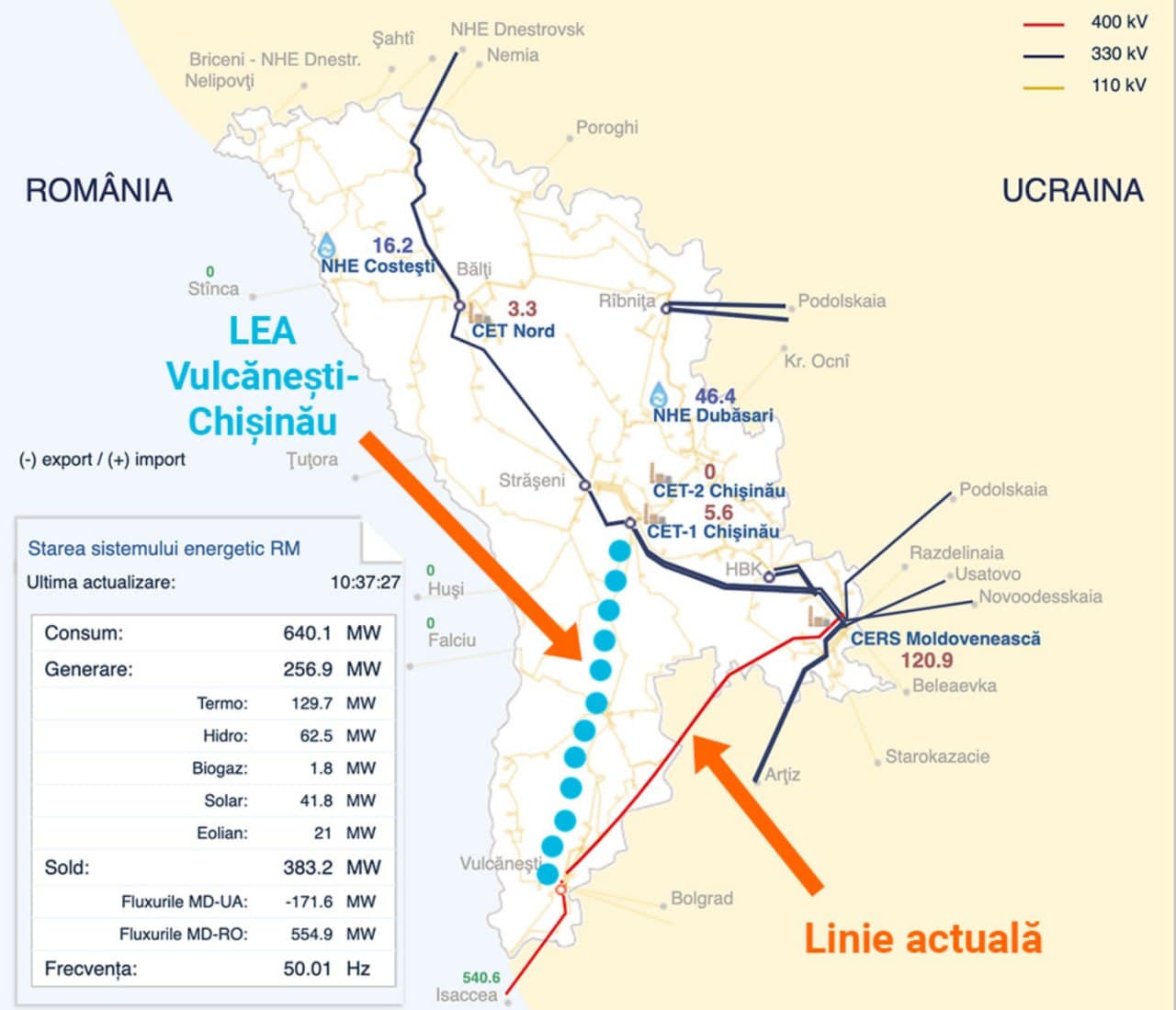
Moldova is actively pursuing energy interconnectivity with Romania as a crucial step toward its integration into the European Union. Currently, the country is constructing a 400 kV transmission line that will connect the border city of Vulcănești to its capital, Chișinău. This project is part of Moldova"s broader strategy to enhance its energy independence and security.
Vulcănești is already linked to the Romanian power grid through an existing transmission line that connects it to the town of Isaccea in Romania. Future plans include the development of another transmission line that will connect Bălți, Moldova"s second-largest city, with Suceava in Romania. These overhead power lines are expected to strengthen the energy ties between Romania and Moldova significantly.
Moreover, these developments will reduce Chișinău"s reliance on electricity generated by power plants in the breakaway region of Transnistria. This shift is anticipated to provide Moldova with greater leverage in negotiations with Transnistria, potentially facilitating a peaceful resolution to the ongoing territorial disputes.
Background
The energy strategy outlined by Romania reflects a broader commitment to regional stability and cooperation in the face of external threats. The ongoing conflict in Ukraine has heightened the urgency for Moldova to secure its energy supply and reduce dependence on potentially hostile sources.
Romania"s support for Moldova is not only a matter of energy security but also aligns with the European Union"s goals of promoting stability and integration in Eastern Europe. As Moldova continues its journey towards EU membership, strengthening its energy infrastructure and security will be pivotal.
What"s Next
The implications of Romania"s pledge to cover Moldova"s energy bills are significant. This commitment not only reinforces the bilateral relationship between the two nations but also enhances Moldova"s energy independence. As the construction of new transmission lines progresses, Moldova is expected to achieve a more robust energy framework, which will be crucial for its aspirations to join the European Union.
In summary, Romania"s proactive stance in supporting Moldova"s energy needs is a critical step in fostering regional cooperation and stability, particularly in the context of ongoing geopolitical tensions. The developments in energy infrastructure will likely play a vital role in shaping the future of both countries.
For more on international relations and regional developments, see our related coverage.
![[Video] Ukrainian SBU strikes Russian oil tanker Dashan in Black Sea](/_next/image?url=%2Fapi%2Fimage%2Fthumbnails%2Fthumbnail-1765387285866-kt6h7c-thumbnail.jpg&w=3840&q=75)