Trump"s Venezuela Oil Revival Plan Could Cost $100 Billion
In a significant move to revitalize Venezuela"s struggling oil industry, President Donald Trump has proposed a plan that could require an investment of over $100 billion. This ambitious initiative aims to restore the country"s oil production to its historical peak levels, which were last seen in the 1970s. However, experts warn that the process could take years and face numerous challenges, including extensive corruption, underinvestment, and deteriorating infrastructure.
Key Details
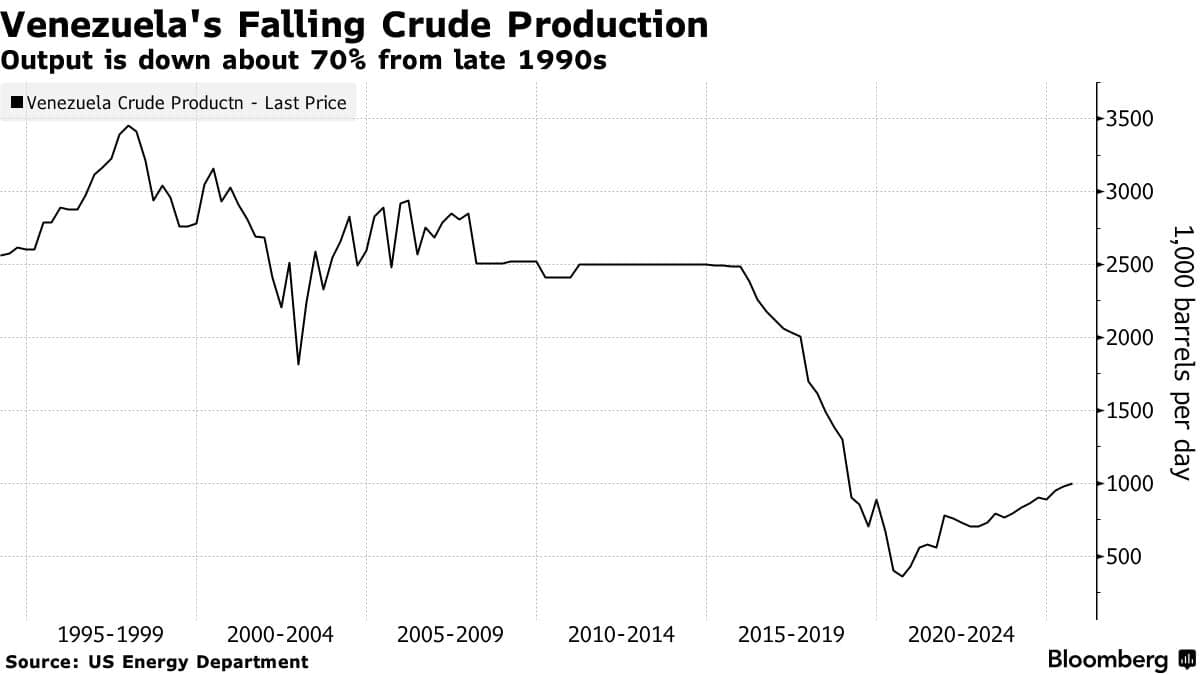
Venezuela is home to the world"s largest proven oil reserves, yet its production has dramatically declined from nearly 4 million barrels per day in 1974 to approximately 1 million barrels per day in recent years. This decline is largely attributed to the 12-year presidency of Nicolás Maduro, who was recently captured by U.S. troops. The current state of Venezuela"s oil infrastructure is dire, with years of neglect leading to significant operational inefficiencies.
According to Francisco Monaldi, the director of Latin American energy policy at Rice University’s Baker Institute for Public Policy, restoring Venezuela"s oil output would necessitate an investment of about $10 billion annually over the next decade. Monaldi emphasized that a quicker recovery would require even more substantial financial commitments from oil companies.
U.S. Secretary of State Marco Rubio expressed optimism regarding the potential for U.S. oil companies to engage in drilling for Venezuela"s heavy crude, which is essential for refineries located on the U.S. Gulf Coast. During an interview with ABC, Rubio stated, “I think there will be tremendous demand and interest from private industry if given the space to do it.” He noted that while he had not recently spoken to U.S. oil companies, he anticipated a strong interest in the opportunity to invest in Venezuela"s oil sector.
However, Lino Carrillo, a former manager at Venezuela"s state oil company, Petroleos de Venezuela SA, cautioned that for U.S. oil companies to seriously consider investing in Venezuela, there would need to be a new congress or National Assembly in place. Carrillo, who fled Venezuela over two decades ago, expressed skepticism about the current political situation, stating, “Not what’s happening now. Definitely not.”
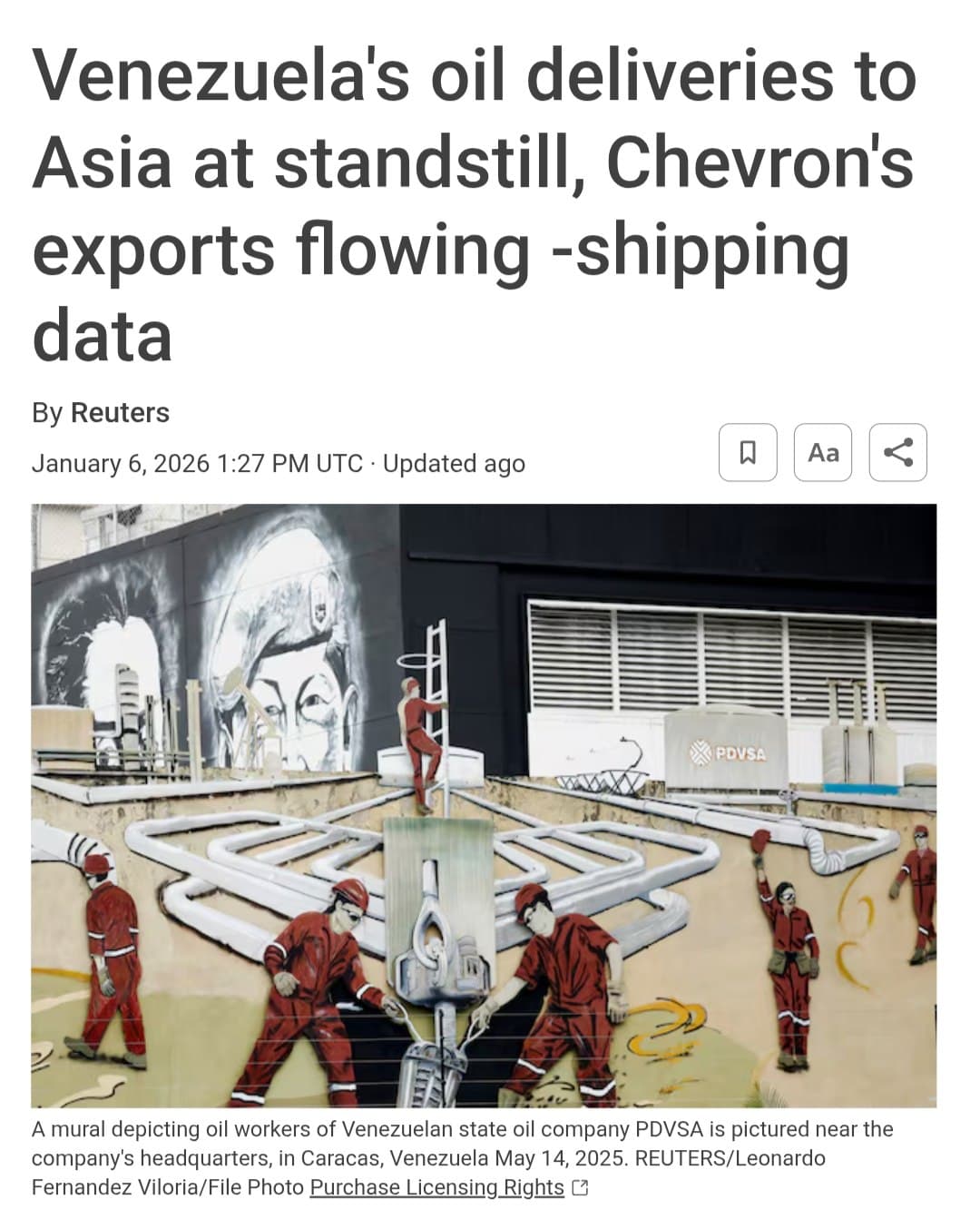
The infrastructure challenges facing Venezuela"s oil ports are significant. Currently, it takes up to five days to fully load supertankers that transport crude oil to China, a stark contrast to just one day seven years ago. This inefficiency underscores the urgent need for repairs and upgrades to the country’s oil facilities.
As of now, Chevron is the only major U.S. oil company still operating in Venezuela, accounting for approximately 25% of the nation"s oil output. Chevron operates under special licenses that allow it to continue its activities despite U.S. sanctions. Other major U.S. oil companies, such as Exxon Mobil Corp. and ConocoPhillips, are also seen as potential players in the rebuilding of Venezuela"s oil industry. Both companies previously operated in Venezuela but exited after their assets were nationalized by former President Hugo Chavez in the mid-2000s.
Background
The Venezuelan oil industry has been plagued by years of mismanagement, corruption, and a lack of investment, leading to a significant decline in production capabilities. The political landscape in Venezuela has also been unstable, particularly under Maduro"s leadership, which has further complicated foreign investment opportunities.
What"s Next
The path forward for the revival of Venezuela"s oil industry remains uncertain. While there is potential interest from U.S. oil companies, significant investments will only materialize if the political situation stabilizes and a conducive environment for business is established. The rebuilding of Venezuela"s oil infrastructure will require not only financial resources but also a commitment to addressing the underlying issues that have led to the industry"s decline.
For further context on the political landscape, see previous reports on Maduro"s recent capture and its implications for U.S.-Venezuela relations.
![[Video] Steve Witkoff announces progress on prosperity agreement for Ukraine](/_next/image?url=%2Fapi%2Fimage%2Fthumbnails%2Fthumbnail-1767729058606-u35avl-thumbnail.jpg&w=3840&q=75)
![[Video] Iranian Crown Prince Reza Pahlavi says historic moment for regime change](/_next/image?url=%2Fapi%2Fimage%2Fthumbnails%2Fthumbnail-1767775248144-s5uem8-thumbnail.jpg&w=3840&q=75)