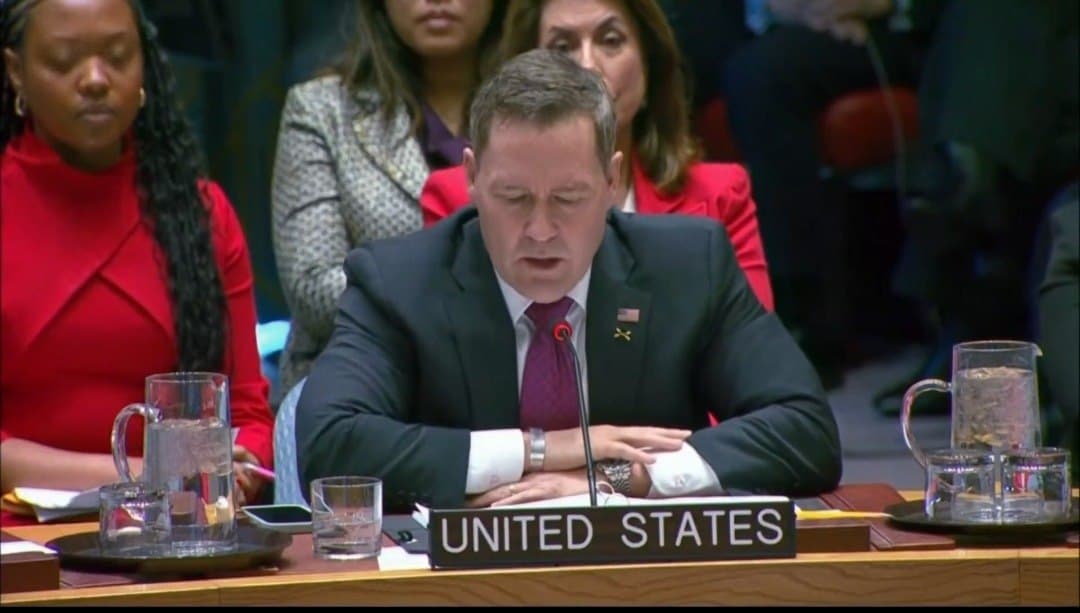
US Ambassador to UN states no war against Venezuela or its people
On January 5, 2026, United States Ambassador to the United Nations, Michael Waltz, made a significant statement regarding the U.S. stance on Venezuela during a press briefing. Waltz emphasized that the United States is not engaged in a war against Venezuela or its citizens, nor is it occupying the nation. His remarks come amid ongoing tensions in the region and concerns over the geopolitical implications of Venezuela"s vast natural resources.
Key Details
Ambassador Waltz articulated a clear position on U.S. foreign policy in the Western Hemisphere, asserting, "This is the Western Hemisphere; this is where we live, and we are not going to allow the Western Hemisphere to be used as a base of operations for adversaries, competitors, and rivals of the US." This statement underscores the U.S. commitment to maintaining influence and security in its immediate geographic area.
Waltz highlighted the strategic importance of Venezuela, which possesses the world"s largest energy reserves. He stated, "You cannot continue to have the world’s largest energy reserves under the control of adversaries of the US." This comment reflects the U.S. government"s concern over energy security and the potential for rival nations to leverage Venezuela"s resources against American interests.
Background
The context of Waltz"s remarks can be traced back to the ongoing political and economic crisis in Venezuela, which has been exacerbated by the leadership of President Nicolás Maduro. The Maduro administration has faced international criticism for its handling of the economy, human rights violations, and alleged corruption. Recently, Maduro has been embroiled in legal troubles, including a federal case in the United States, where he pleaded not guilty to all charges, claiming to be a "decent man." For more on this, see our previous reports.
Venezuela"s political instability has led to a mass exodus of its citizens, with millions fleeing the country in search of better living conditions. The U.S. has been closely monitoring these developments, as the situation poses both humanitarian and security challenges in the region.
What"s Next
The implications of Waltz"s statements could be significant for U.S.-Venezuela relations moving forward. The U.S. government appears to be signaling its intent to maintain a strong presence in the Western Hemisphere, particularly in light of the strategic importance of Venezuela"s energy resources. As previously reported, the U.S. has taken various measures to counteract the influence of rival nations in the region, which may include diplomatic efforts, economic sanctions, and support for opposition movements within Venezuela.
As the situation evolves, it will be crucial to observe how the U.S. government balances its foreign policy objectives with the humanitarian needs of the Venezuelan people. The international community will likely continue to watch closely as developments unfold, particularly in relation to Maduro"s ongoing legal battles and the broader implications for regional stability.
![[Video] Anti-regime protests continue in over 100 cities across Iran](/_next/image?url=%2Fapi%2Fimage%2Fthumbnails%2Fthumbnail-1767778241482-69wx0n-thumbnail.jpg&w=3840&q=75)