U.S. Coast Guard Boards Vessel Centuries with Panama"s Permission
On December 21, 2025, the U.S. Coast Guard successfully boarded the vessel Centuries in a maritime operation conducted with the permission of the Panamanian government. This action was taken under a maritime law known as the "right of visit," which allows naval forces to board and inspect foreign vessels suspected of engaging in illicit activities.
Key Details
The operation involved the U.S. Coast Guard, a branch of the United States Armed Forces responsible for maritime law enforcement, search and rescue, and environmental protection. The Coast Guard"s decision to board the Centuries was facilitated by the fact that the vessel is not under U.S. sanctions, as confirmed by a U.S. official who spoke to The Washington Post on the condition of anonymity. This anonymity was granted to protect the official"s identity while discussing sensitive operational details that had not yet been made public.
The "right of visit" is a principle in international maritime law that permits warships to board foreign vessels on the high seas if they have reasonable grounds to suspect that the vessel is involved in illegal activities, such as smuggling or piracy. This legal framework is crucial for maintaining maritime security and enforcing international law.
In this instance, the Coast Guard obtained explicit permission from the government of Panama, a sovereign nation located in Central America, which is known for its strategic location and the Panama Canal, a key conduit for international maritime trade. The cooperation between the U.S. and Panama underscores the importance of international partnerships in combating maritime crime and ensuring safe navigation in shared waters.
Background
The boarding of the Centuries is part of a broader effort by the U.S. Coast Guard to monitor and enforce maritime laws in regions where illicit activities are prevalent. The Coast Guard has been increasingly active in operations aimed at curbing drug trafficking and other illegal maritime activities, particularly in the Caribbean and Central American waters. This operation aligns with previous reports of the Coast Guard"s commitment to safeguarding maritime routes and upholding international law.
In recent months, the U.S. Coast Guard has been involved in various operations, including the pursuit of vessels refusing to be boarded, as seen in the case of the Bella 1 oil tanker. Such operations highlight the ongoing challenges faced by maritime enforcement agencies in ensuring compliance with international regulations.
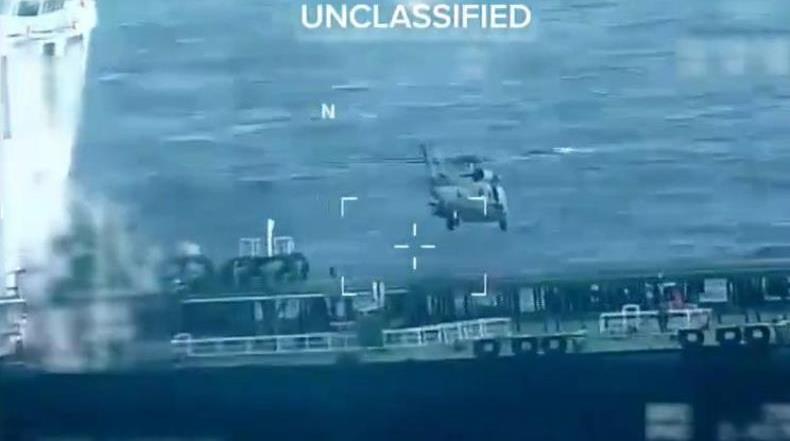
Image for U.S. Coast Guard boards vessel Centuries with Panama"s permission
What"s Next
The successful boarding of the Centuries may lead to further investigations into the vessel"s activities and its compliance with international maritime laws. The U.S. Coast Guard"s actions could also prompt discussions regarding the effectiveness of current maritime laws and the necessity for enhanced international cooperation in combating maritime crime.
As the situation develops, it will be essential to monitor the outcomes of this operation and any subsequent actions taken by the U.S. and Panamanian authorities. The collaboration between these nations may serve as a model for future maritime enforcement efforts in the region.
For more on related coverage, see our article on the U.S. Coast Guard"s active pursuit of the Bella 1 oil tanker.
![[Video] Senator Graham proposes giving Tomahawk missiles to Ukraine if Putin refuses](/_next/image?url=%2Fapi%2Fimage%2Fthumbnails%2Fthumbnail-1766351441303-aj8spd-thumbnail.jpg&w=3840&q=75)
![[Video] Hamas is consolidating power and rearming, says Senator Lindsey Graham](/_next/image?url=%2Fapi%2Fimage%2Fthumbnails%2Fthumbnail-1766350853630-5pmqab-thumbnail.jpg&w=3840&q=75)
![[Video] Senator Graham proposes tariffs on countries buying Russian oil](/_next/image?url=%2Fapi%2Fimage%2Fthumbnails%2Fthumbnail-1766350841885-jxlufj-thumbnail.jpg&w=3840&q=75)