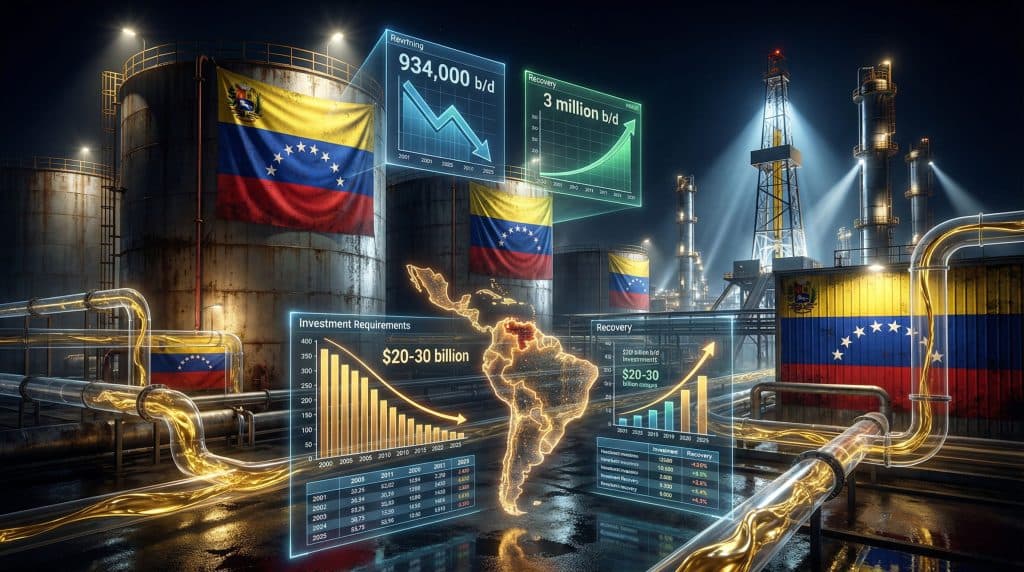
Venezuela"s Oil Production Recovery Faces Significant Challenges
As of January 5, 2026, the narrative surrounding Venezuela"s potential to flood the global oil market is being challenged by experts who highlight the significant obstacles facing the country"s oil industry. The assertion that Venezuela could rapidly increase its oil production has been described as misleading, particularly when compared to the historical recovery trajectories of other oil-producing nations like Iraq and Libya following conflicts.
Key Details
In examining Iraq"s oil production, data reveals a stark contrast in recovery rates post-conflict. Before the U.S.-led invasion in 2003, Iraq"s oil production stood at approximately 2.8 million barrels per day (mbpd). During the war, production plummeted to about 1.2 mbpd. It wasn"t until 2015 that Iraq managed to increase its output to 3.5 mbpd, nearly a decade after the war began. Despite expectations that Iraq could reach an ambitious production target of around 8 mbpd by 2020, projections for 2025 indicate that the country is producing only about half of that target, even after investing approximately $220 billion in its oil sector.
Libya"s experience mirrors that of Iraq. In 2010, Libya"s oil production peaked at 1.7 mbpd. However, as of now, the country is producing only around 1.3 mbpd, failing to recover to its pre-war levels even after 15 years of instability and conflict.
Venezuela"s situation is further complicated by the nature of its oil reserves. Unlike Iraq, which primarily produces light crude oil, Venezuela is known for its extra-heavy crude, a type of oil that is notably thick and tar-like. This type of crude does not flow naturally and requires heating to be extracted. Once it is brought to the surface, it tends to re-solidify, necessitating the use of a diluent for transportation. For every barrel of oil exported, approximately 0.3 barrels of diluent must be imported, adding to the logistical challenges of production.
Moreover, Venezuela"s oil infrastructure is in a state of disrepair. The country suffers from frequent blackouts, which disrupt production and operations. The export terminals, crucial for shipping oil to international markets, have deteriorated significantly over the years. Current assessments suggest that Venezuela"s oil infrastructure is in worse condition than that of Iraq, which has faced extensive conflict and violence.
Image for Venezuela"s oil production recovery faces significant challenges
Background
The challenges facing Venezuela"s oil industry are not merely technical; they are also a reflection of the broader economic and political crises that have plagued the nation for years. The combination of mismanagement, economic sanctions, and a lack of investment has led to a dramatic decline in oil production, which is critical to Venezuela"s economy. Historically, oil has been the backbone of Venezuela"s economy, contributing significantly to government revenue and foreign exchange earnings.
What"s Next
Given the historical precedents set by Iraq and Libya, experts suggest that Venezuela"s recovery in oil production will be a long and arduous process. It is likely to require substantial investment and a stable political environment to rebuild its oil infrastructure and increase production levels. The lessons learned from previous U.S. interventions in oil-rich nations indicate that returning to pre-war production levels can take billions of dollars and a decade of dedicated effort. Therefore, the expectation that Venezuela could quickly flood the oil market may be overly optimistic, as the country faces unique challenges that will take time to overcome.
For further insights into Venezuela"s oil production challenges, see our recent developments on the topic.
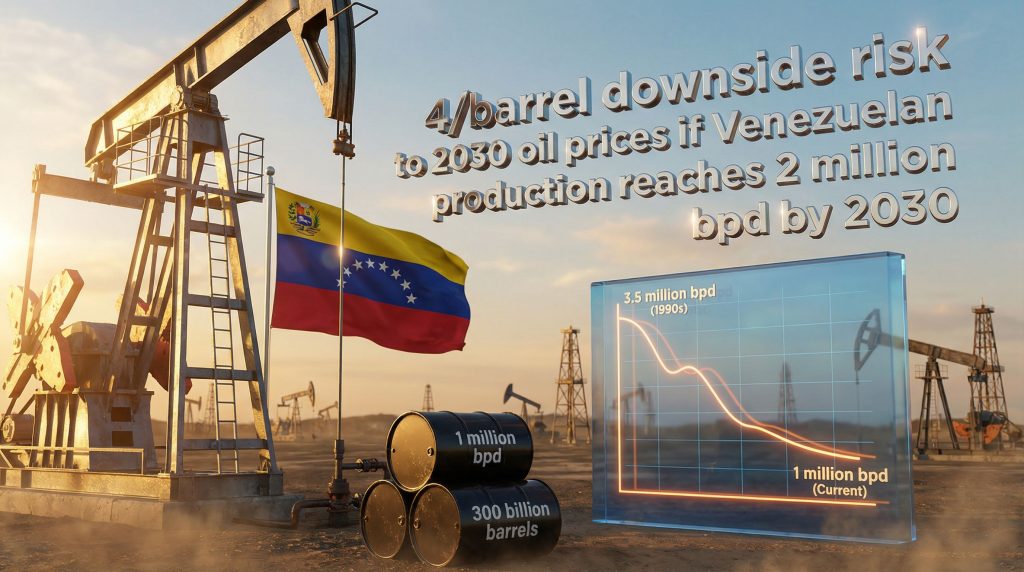
Image for Venezuela"s oil production recovery faces significant challenges


![[Video] U.S. Energy Secretary emphasizes reliance on oil, gas, and coal](/_next/image?url=%2Fapi%2Fimage%2Fthumbnails%2Fthumbnail-1767799264814-1i2gze-thumbnail.jpg&w=3840&q=75)