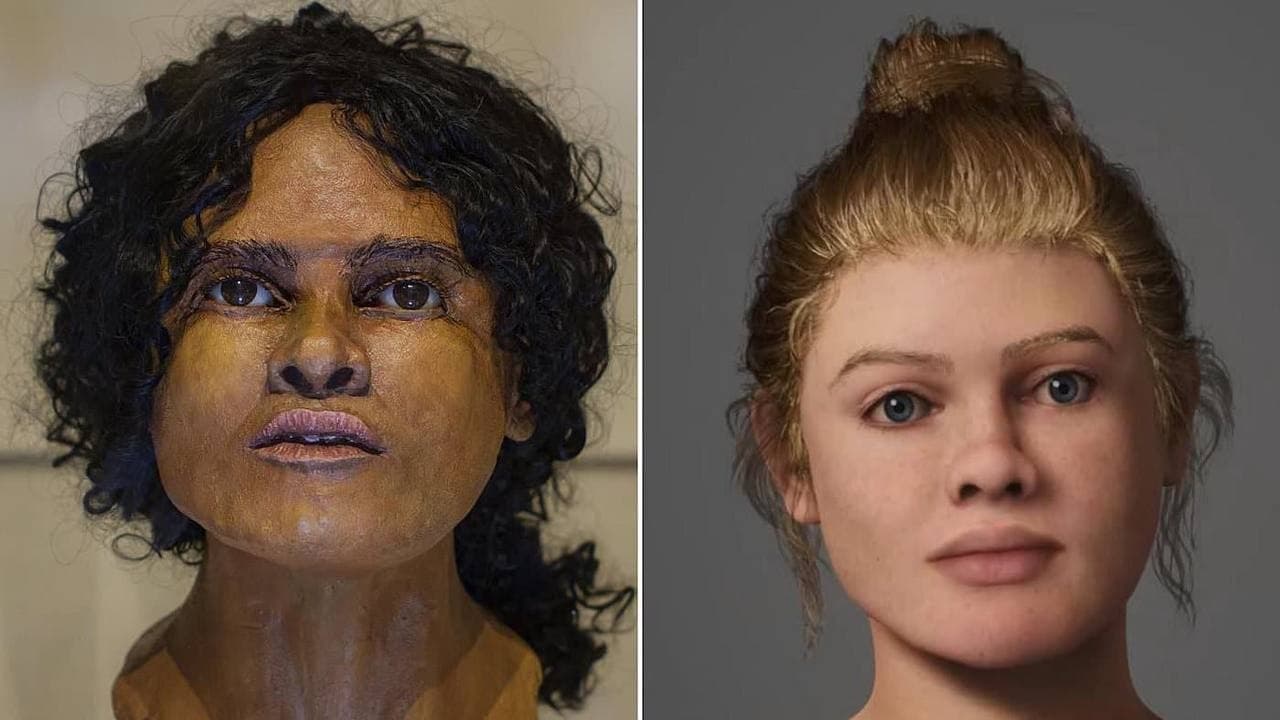
DNA Study Reveals "Beachy Head Woman" of Local Southern British Ancestry
Published: December 19, 2025
A groundbreaking DNA study has revised the origins of a Roman-era skeleton known as the "Beachy Head Woman," previously believed to be of sub-Saharan African descent. This new research, published in the Journal of Archaeological Science, indicates that the woman, who lived between 129 and 311 AD, was actually of local southern British ancestry.
Key Details
The "Beachy Head Woman" was discovered at Beachy Head, a prominent chalk headland located near Eastbourne in East Sussex, England. Initial assessments of her skull suggested that she was of sub-Saharan African origin, leading to discussions about her significance as one of the earliest known Black Britons. However, advanced genetic sequencing techniques have now provided a clearer picture of her ancestry.
According to the study, the genetic analysis revealed that the woman likely had blue eyes, light or fair hair, and intermediate to light skin pigmentation. This finding contradicts earlier assumptions about her ethnic background and highlights the complexity of ancient British ancestry. Notably, the researchers found no evidence of recent sub-Saharan ancestry in her genetic makeup, further supporting the conclusion that she was a local inhabitant of southern Britain.
The research team utilized cutting-edge DNA sequencing technology to analyze the ancient remains, which allowed them to obtain more accurate genetic information than was previously possible. This advancement in archaeological science underscores the importance of modern techniques in re-evaluating historical narratives.
Background
The "Beachy Head Woman" has been a subject of interest since her discovery, as she was initially celebrated for providing evidence of the presence of Black individuals in Britain during the Roman period. The initial interpretation of her ancestry was based on morphological analysis of her skull, which suggested features typically associated with sub-Saharan African populations. However, this new genetic evidence invites a re-examination of the diversity of ancient populations in Britain.
This study is part of a broader trend in archaeology and genetics, where researchers are increasingly using DNA analysis to uncover the true origins of ancient peoples. The implications of such studies are significant, as they challenge long-held assumptions about race and ethnicity in historical contexts.
What"s Next
The findings from this study may lead to further research into the genetic diversity of ancient populations in Britain and beyond. As more ancient DNA is sequenced, historians and archaeologists will likely continue to refine their understanding of the migration patterns and interactions of different groups throughout history. This research not only enriches our knowledge of the past but also prompts discussions about identity and heritage in contemporary society.
For those interested in related topics, recent developments in other areas of research can be found in articles such as "Study reveals "Beachy Head Lady" was local girl with blonde hair, blue eyes", which further explores the implications of genetic studies in historical contexts.
![[Video] Sir Robert Menzies warns against issues from White Australia Policy](/_next/image?url=%2Fapi%2Fimage%2Fthumbnails%2Fthumbnail-1765723880043-x8t0ro-thumbnail.jpg&w=3840&q=75)
![[Video] Thomas Rousseau introduces 'White American History: I - Before Jamestown'](/_next/image?url=%2Fapi%2Fimage%2Fthumbnails%2Fthumbnail-1765291393654-udewz7-thumbnail.jpg&w=3840&q=75)