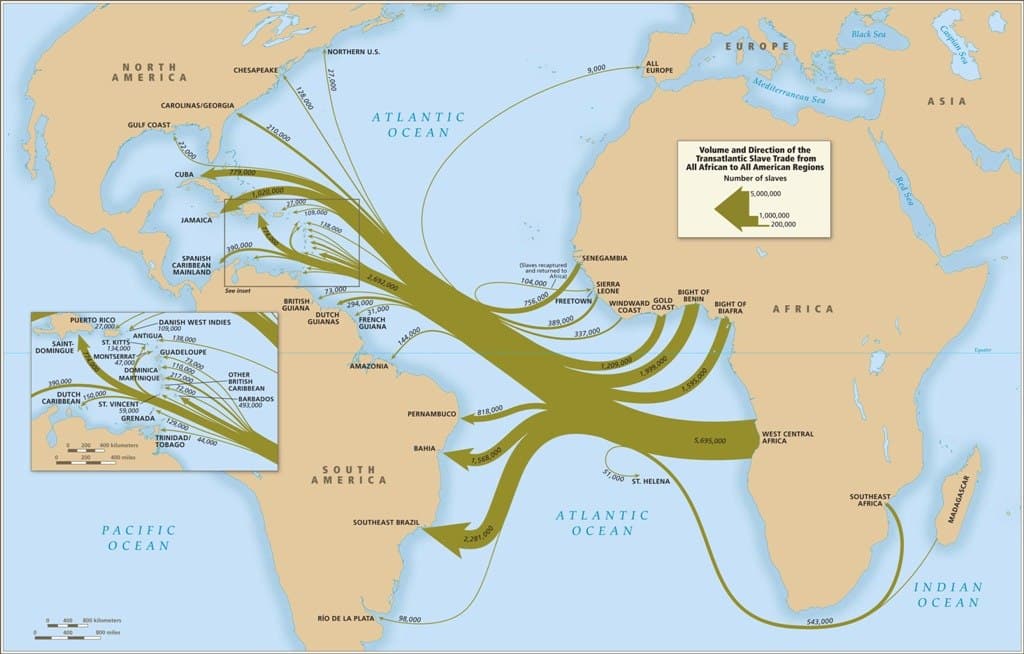
Map Illustrates Volume and Direction of Trans-Atlantic Slave Trade
A new map has been released that provides a comprehensive overview of the trans-Atlantic slave trade, detailing the various routes taken by enslaved individuals from Africa to the Americas. This map highlights the significant connections between embarkation points in Africa and disembarkation locations across the Americas, illustrating the complex and extensive nature of this historical trade.
Key Details
The map summarizes the multitude of paths that captives took as they left Africa, emphasizing that while certain regions had strong ties to specific embarkation and disembarkation sites, captives from any major African region could arrive in nearly any major American region. This includes the notable fact that individuals departing from Southeast Africa, the furthest region from the Americas, were still able to disembark in various locations, including mainland North America, the Caribbean, and South America.
The data presented in this map is derived from estimates of the total slave trade, rather than relying solely on documented departures and arrivals. This approach allows for a broader understanding of the scale and scope of the trans-Atlantic slave trade, which forcibly transported millions of Africans to the Americas over several centuries.
Background
The trans-Atlantic slave trade, which spanned from the 16th to the 19th centuries, involved the forced migration of an estimated 12.5 million Africans. These individuals were taken from various regions across the continent, including West Africa, Central Africa, and Southeast Africa, and were shipped to various destinations in the Americas. The trade was driven by the demand for labor in the Americas, particularly in agricultural sectors such as sugar, tobacco, and cotton.
Historically, the trade routes were influenced by several factors, including European colonial interests, the establishment of plantations, and the economic demands of the burgeoning American colonies. The map serves as a visual representation of these intricate networks and the human cost associated with them.
What"s Next
This map not only serves as an educational tool but also as a reminder of the enduring impact of the trans-Atlantic slave trade on modern society. Understanding the volume and direction of this trade is crucial for comprehending the historical context of racial dynamics and socio-economic disparities that persist today. As previously reported, the legacy of the slave trade continues to influence discussions around race, identity, and reparative justice in contemporary society.
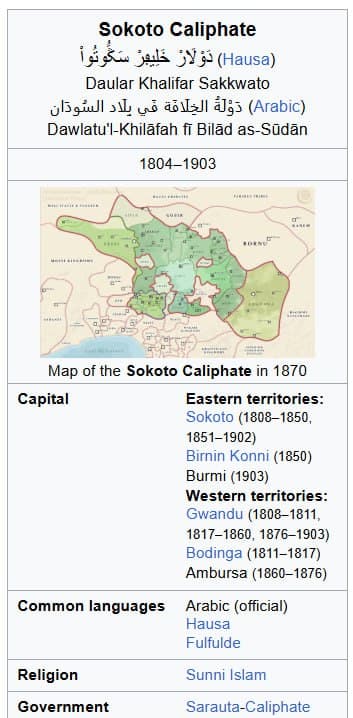
For further insights into related historical contexts, readers may explore how regions like Sokoto were pivotal in shaping the socio-political landscape of West Africa before British intervention. This historical backdrop provides a deeper understanding of the conditions that led to the trans-Atlantic slave trade and its far-reaching consequences.
To learn more about the ongoing implications of historical injustices, readers can also refer to recent developments regarding political actions and their impacts on communities affected by such legacies.

![[Video] 27,000 American troops invade Panama to topple Manuel Noriega](/_next/image?url=%2Fapi%2Fimage%2Fthumbnails%2Fthumbnail-1766343047951-w21en7-thumbnail.jpg&w=3840&q=75)
![[Video] Joost Strydom explains significance of Orania and the Great Trek](/_next/image?url=%2Fapi%2Fimage%2Fthumbnails%2Fthumbnail-1766320879093-fumedr-thumbnail.jpg&w=3840&q=75)

![[Video] Charles Schulz defied CBS to air A Charlie Brown Christmas in 1965](/_next/image?url=%2Fapi%2Fimage%2Fthumbnails%2Fthumbnail-1766713846457-pdymtm-thumbnail.jpg&w=3840&q=75)