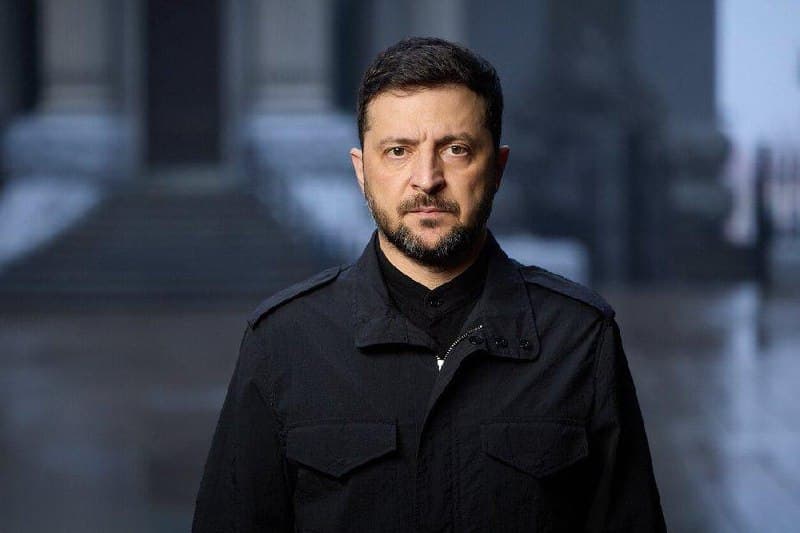
Zelensky Reveals All 20 Points of Ukraine"s Peace Plan
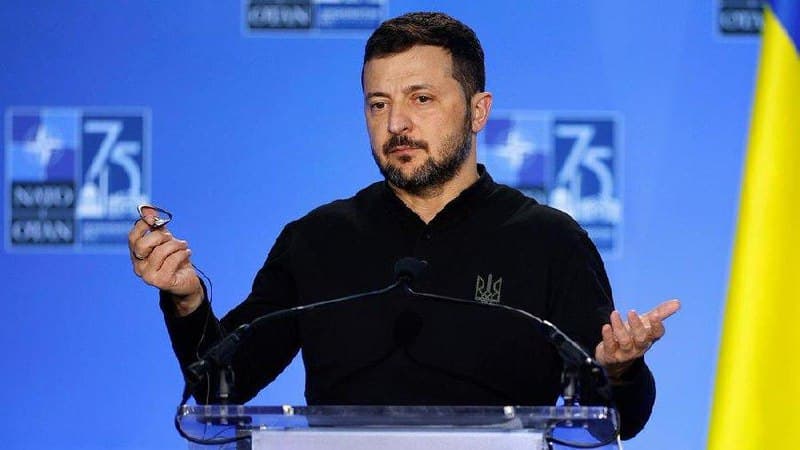
In a significant development for international diplomacy, Ukrainian President Volodymyr Zelensky has unveiled the complete 20-point peace plan aimed at resolving the ongoing conflict with Russia. This announcement marks a pivotal moment in Ukraine"s efforts to secure its sovereignty and establish a framework for lasting peace. The details of the plan were disclosed on December 24, 2025, amidst ongoing tensions in the region.
Key Details
The peace plan includes the following key points:
- Confirmation of Ukraine’s sovereignty: The plan emphasizes the recognition of Ukraine"s territorial integrity and independence.
- Non-aggression pact: A formal agreement is proposed to be signed between Russia and Ukraine to prevent future hostilities.
- Security guarantees: Ukraine is to receive robust security assurances from international allies.
- Limit on armed forces: Ukraine"s peacetime military personnel will be capped at 800,000.
- Article 5-like guarantees: The United States, NATO, and European nations will provide security guarantees similar to NATO"s Article 5, which states that an attack on one member is an attack on all. In the event of a new Russian invasion, a military response and the reimposition of sanctions will follow.
- Legislative non-aggression policy: Russia is expected to enshrine a policy of non-aggression towards Europe and Ukraine in its laws.
- EU membership timeline: Ukraine aims to become a member of the European Union, with a fixed date for accession.
- Global development package: A separate investment agreement will define a comprehensive global development package for Ukraine.
- Reconstruction funds: The plan outlines the creation of several funds for Ukraine’s reconstruction, totaling $800 billion.
- Free trade agreement: A free trade agreement between Ukraine and the United States is proposed.
- Nuclear weapons commitment: Ukraine commits to not pursuing nuclear weapons.
- Zaporizhzhia Nuclear Power Plant management: The U.S. proposes a trilateral management structure for the Zaporizhzhia Nuclear Power Plant, with an emphasis on joint U.S.-Ukraine management.
- Educational programs: Introduction of educational initiatives in schools to foster tolerance, intercultural understanding, and combat racism and prejudice.
- Territorial negotiations: Ukraine proposes that Russia withdraw from the Dnipropetrovsk, Mykolaiv, Sumy, and Kharkiv regions, while maintaining the status quo in Donetsk, Luhansk, Zaporizhzhia, and Kherson regions. Russia demands Ukraine"s withdrawal from the Donetsk region. A U.S. compromise suggests a free economic zone, contingent on a referendum in Ukraine.
- Commitment against forceful changes: Both nations will agree not to alter the agreements through force.
- Access to waterways: Russia will not obstruct Ukraine"s use of the Dnipro River and the Black Sea for commercial activities, and the Kinburn Spit is to be demilitarized.
- Prisoner exchange: An all-for-all exchange of prisoners, including civilians, children, and political prisoners, is proposed.
- Timely elections: Ukraine commits to holding elections as soon as possible following the signing of the agreement.
- Legally binding agreement: The agreement will be legally binding and monitored by a "Peace Council," chaired by the President of the United States.
- Immediate ceasefire: A full ceasefire will take effect immediately after all parties agree to the stated conditions.
Background
This peace plan emerges amid ongoing conflict between Ukraine and Russia, which began in 201
![[Video] Explosion in southern Moscow kills two traffic police officers and suspect](/_next/image?url=%2Fapi%2Fimage%2Fthumbnails%2Fthumbnail-1766569841024-hf8a14-thumbnail.jpg&w=3840&q=75)
![[Video] Nick Fuentes claims White Genocide is worse than 9/11 for America](/_next/image?url=%2Fapi%2Fimage%2Fthumbnails%2Fthumbnail-1766580662650-714v-thumbnail.jpg&w=3840&q=75)
![[Video] Hawaii's Kilauea volcano erupts, fountains reach 70 ft, USGS reports](/_next/image?url=%2Fapi%2Fimage%2Fthumbnails%2Fthumbnail-1766574042820-tucull-thumbnail.jpg&w=3840&q=75)