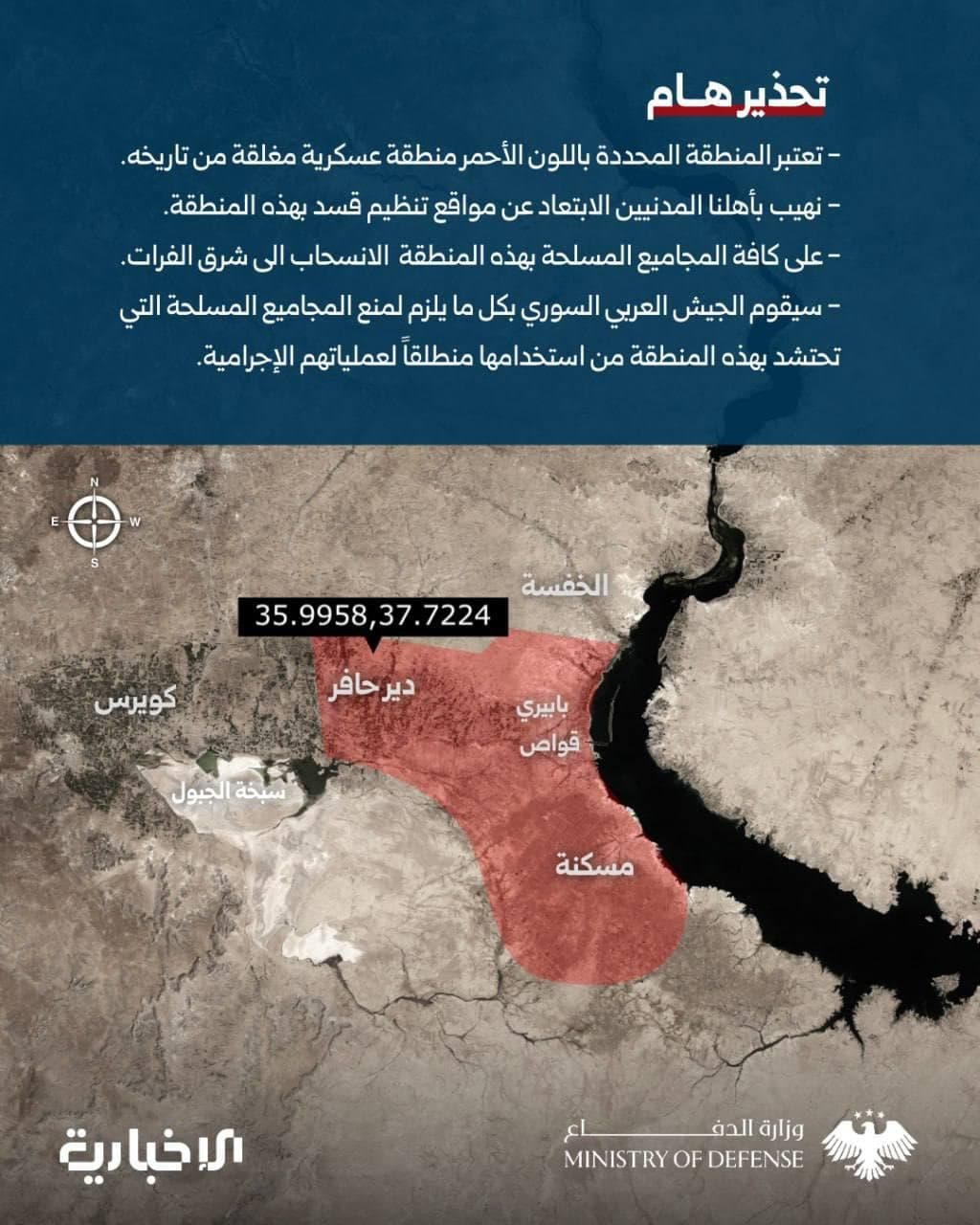
Syrian Army Declares Deir Hafer and Maskanah a Closed Military Zone
On January 13, 2026, the Syrian Army Command announced the immediate designation of Deir Hafer and Maskanah, along with nearby towns such as Babiri and Qawas, as a closed military zone. This decision follows the mobilization and reinforcement of the Syrian Democratic Forces (SDF) in the region, which the military accuses of utilizing these areas as launch points for Iranian-made suicide drones targeting civilian locations in Aleppo.
Key Details
The Syrian Army"s declaration comes amid heightened tensions in northern Syria, particularly in areas where the SDF operates. The military has expressed concerns over the use of these regions for launching drone attacks, which have reportedly resulted in injuries and damage to civilian infrastructure in Aleppo. The specific nature of the attacks and the extent of the damage have not been detailed in the announcement.
In light of these developments, the Syrian Army has issued a warning to civilians, urging them to maintain a safe distance from SDF positions to avoid potential harm. This precautionary measure reflects the ongoing volatility in the region and the military"s commitment to safeguarding civilian lives.
Additionally, the Syrian Army has ordered all armed groups in the area to withdraw east of the Euphrates River. This directive aims to create a buffer zone and prevent further attacks from the designated military zone. The army has asserted that it will take all necessary measures to ensure the security of the region and to thwart any future assaults originating from these locations.
Background
The Syrian conflict, which began in 2011, has seen various factions vying for control over different territories. The Syrian Democratic Forces, primarily composed of Kurdish fighters, have been a significant player in the conflict, often clashing with Syrian government forces. The involvement of Iranian military technology, particularly in the form of drones, adds another layer of complexity to the ongoing hostilities.
Recent reports have indicated an increase in drone warfare in the region, with Iranian support playing a crucial role in enhancing the capabilities of various armed groups. The Syrian Army"s focus on drone attacks highlights the evolving nature of warfare in Syria, where technology is increasingly being used to target civilian populations and infrastructure.
What"s Next
The implications of this military zone designation could be significant for the ongoing conflict in Syria. The withdrawal of armed groups east of the Euphrates River may lead to a temporary reduction in hostilities in the immediate area, but it is unclear how this will affect the broader dynamics of the conflict. The Syrian Army"s commitment to taking necessary measures suggests that further military actions may be anticipated in response to perceived threats from the SDF and other factions.
As the situation develops, observers will be watching closely for any changes in the military landscape, particularly regarding the use of drone technology and the potential for escalated confrontations between the Syrian Army and the SDF. The international community remains engaged in the region, with various stakeholders monitoring the evolving situation.
For further insights into related geopolitical issues, see our coverage on recent developments in Ukraine and Iran"s influence in the region.