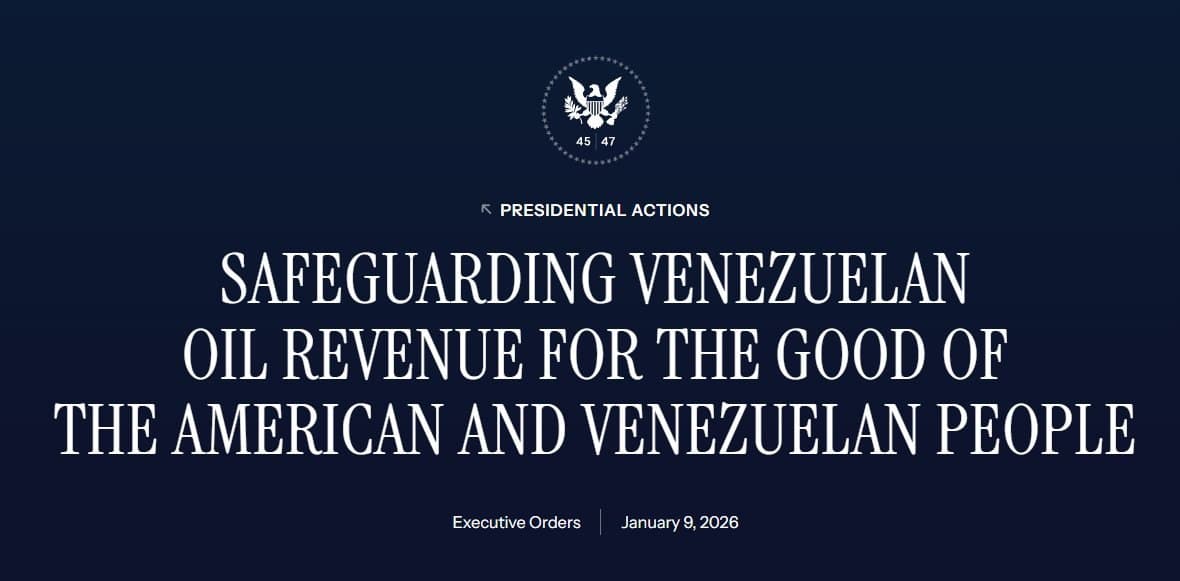
Trump Signs Executive Order to Protect Venezuelan Oil Revenue in U.S.
On January 10, 2026, U.S. President Donald Trump signed an executive order declaring a national emergency aimed at safeguarding Venezuelan oil revenue held in U.S. Treasury accounts. This significant move is intended to prevent courts and creditors from seizing these funds, ensuring their preservation to further U.S. foreign policy objectives.
Key Details
The executive order specifically targets revenue derived from Venezuelan oil sales that are currently held in foreign government deposit funds within the United States. The White House has articulated that these funds should be utilized to support efforts aimed at creating "peace, prosperity, and stability" in Venezuela. This initiative follows the recent U.S. capture of former Venezuelan leader Nicolás Maduro, which has been a pivotal moment in U.S.-Venezuela relations.
By blocking potential seizures of these funds, the executive order seeks to stabilize the Venezuelan economy and promote recovery in the region, aligning with ongoing U.S. initiatives. The Trump administration has emphasized that the protection of these assets is crucial for advancing its foreign policy goals in Latin America.
Background
The political landscape in Venezuela has been tumultuous, particularly following the ousting of Nicolás Maduro, who has been a controversial figure in both Venezuelan and international politics. The U.S. has long been critical of Maduro"s regime, accusing it of human rights abuses and economic mismanagement. The capture of Maduro represents a significant shift in the U.S. approach to Venezuela, as it seeks to support opposition forces and establish a more favorable government.
Venezuelan oil, once a cornerstone of the country"s economy, has seen its revenue plummet due to years of mismanagement and sanctions imposed by the U.S. and other nations. The oil industry, which has historically provided the majority of the country"s foreign currency earnings, is now in a state of decline, making the safeguarding of any remaining revenue even more critical for future recovery efforts.
What"s Next
The implications of this executive order could be far-reaching. By ensuring that Venezuelan oil revenue remains protected, the U.S. aims to leverage these funds to influence the political and economic landscape in Venezuela positively. This move is part of a broader strategy to stabilize the region and promote democratic governance in countries facing authoritarian regimes.
As the situation in Venezuela continues to evolve, the U.S. government"s actions will be closely monitored by international observers and stakeholders. The effectiveness of this executive order in achieving its stated objectives will likely shape future U.S. foreign policy in Latin America and could set a precedent for how the U.S. engages with other nations facing similar challenges.
For more insights on related developments, see our coverage on recent developments in U.S. foreign policy and how they might parallel the situation in Venezuela.

![[Video] Crown prince Reza Pahlavi says Trump ready to help national revolution](/_next/image?url=%2Fapi%2Fimage%2Fthumbnails%2Fthumbnail-1768101070994-cnnj2-thumbnail.jpg&w=3840&q=75)