Ukraine Calls for International Pressure on Iran Over Domestic Violence and Support for Russia
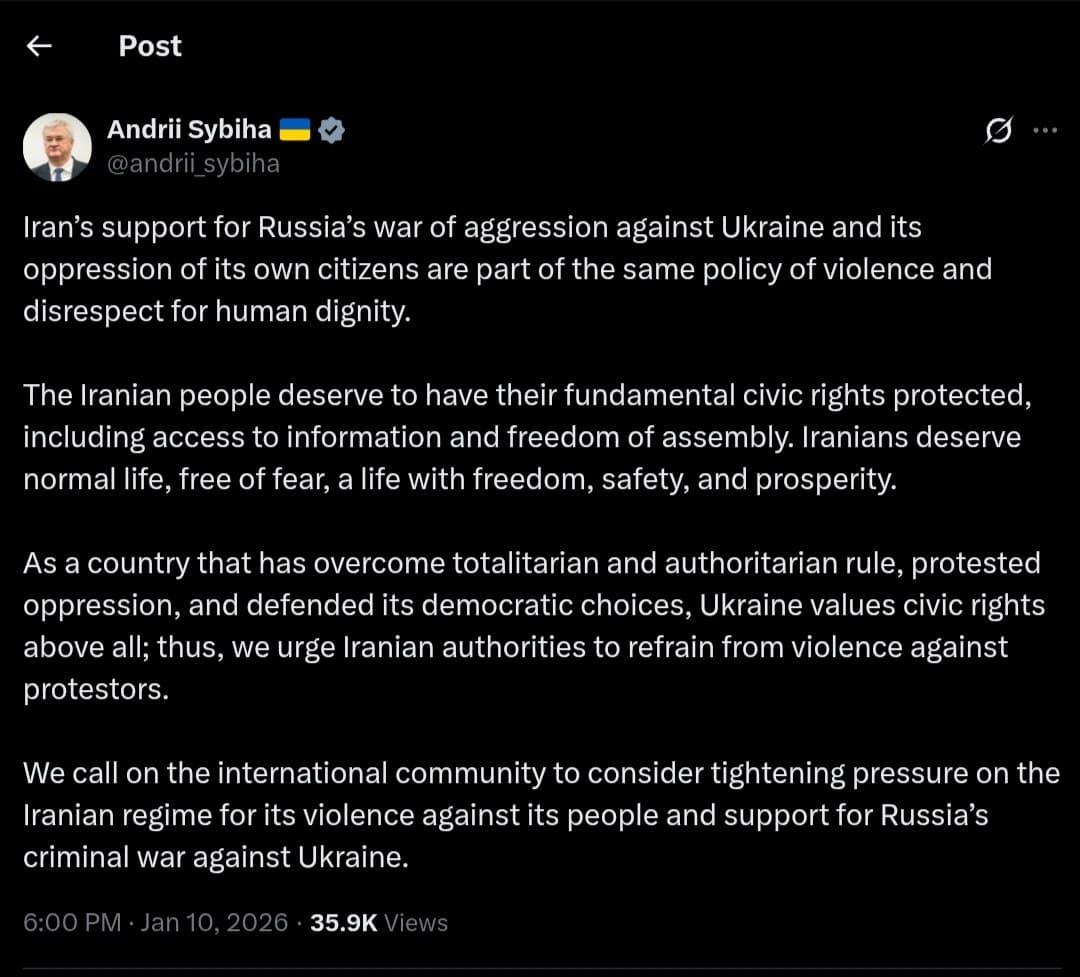
On January 10, 2026, Ukrainian Foreign Minister Andrii Sybiha issued a strong statement urging the international community to intensify pressure on the Iranian regime. This call to action is in response to Iran"s ongoing violence against its own citizens and its support for Russia"s military aggression in Ukraine. The Ukrainian government emphasizes that these two issues are intertwined, reflecting a broader policy of violence and a disregard for human dignity.
Key Details
In his statement, Sybiha articulated that the Iranian regime"s actions against its citizens and its backing of Russia"s war in Ukraine are part of a unified approach that undermines fundamental human rights. He highlighted the importance of protecting the civic rights of the Iranian people, which include access to information and the freedom to assemble peacefully. The Ukrainian Foreign Minister asserted that the Iranian populace deserves a life free from fear, characterized by freedom, safety, and prosperity.
Sybiha"s remarks are particularly poignant given Ukraine"s own history of overcoming totalitarian and authoritarian regimes. He underscored Ukraine"s commitment to civic rights, stating that the country has a deep understanding of the value of democracy and the importance of defending it against oppression. In light of this, he urged Iranian authorities to cease their violent actions against protestors, who are exercising their rights to express dissent.
The call for international action is not merely a rhetorical gesture; it reflects a growing concern among nations regarding Iran"s dual role as both an oppressor of its citizens and a supporter of Russia"s military operations in Ukraine. The Ukrainian government is advocating for a coordinated international response to hold the Iranian regime accountable for its actions.
Background
Iran has been facing significant internal unrest, with citizens protesting against the government"s oppressive policies. Reports indicate that the Iranian government has employed various tactics to suppress dissent, including the use of drones to monitor protests, as highlighted in previous reports. The Iranian regime"s crackdown on civil liberties has drawn international condemnation, with various countries and organizations calling for reforms and respect for human rights.
Simultaneously, Iran"s military support for Russia in its invasion of Ukraine has raised alarms globally. This support includes the provision of drones and other military equipment, which have been utilized in the conflict. The collaboration between Iran and Russia has led to increased scrutiny of Iran"s role in international affairs, particularly concerning its human rights record and its geopolitical alliances.
What"s Next
The Ukrainian government is calling for a unified international response to address the issues of human rights violations in Iran and its support for Russia"s military actions. This could involve diplomatic efforts, sanctions, and other measures aimed at pressuring the Iranian regime to change its behavior. The international community"s response will be crucial in determining the future of both Iranian civil rights and the ongoing conflict in Ukraine.
As the situation develops, it remains to be seen how the international community will react to Ukraine"s call for action. The implications of this situation extend beyond the borders of Iran and Ukraine, potentially affecting global diplomatic relations and the balance of power in the region.
For further context on similar situations, readers may refer to previous reports on the Iranian government"s use of drones to monitor protests and the broader implications of international military actions, such as recent developments involving U.S. military airstrikes against ISIS in Syria.